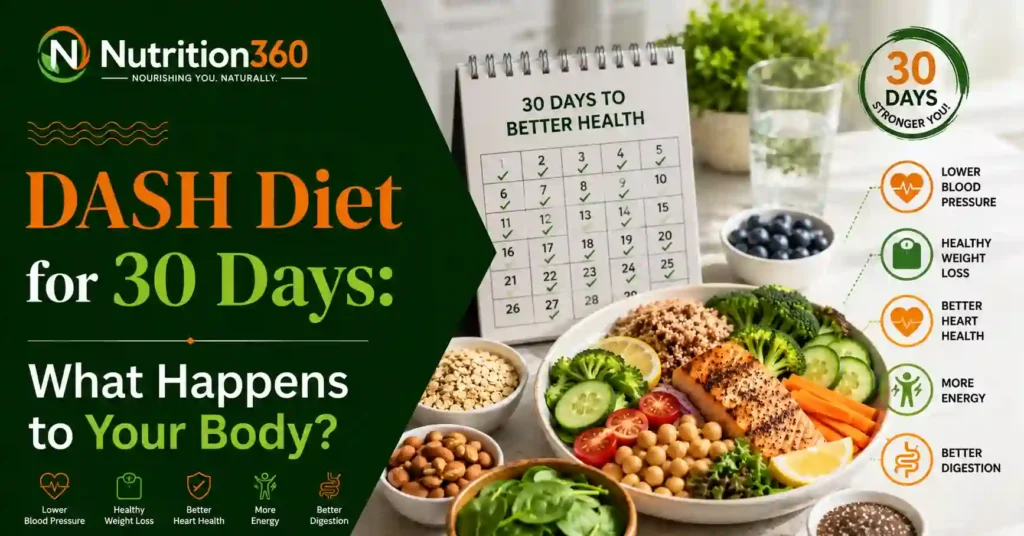
DASH Diet for 30 Days: What Happens to Your Body?
Table of Contents
ToggleThe DASH Diet for 30 Days is a practical approach to improving eating habits, supporting healthy blood pressure, and promoting better heart health. DASH stands for Dietary Approaches to Stop Hypertension and was developed to help lower blood pressure through a balanced eating pattern rich in vegetables, fruits, whole grains, legumes, nuts, seeds, and low-fat dairy while limiting sodium, saturated fat, added sugars, and highly processed foods.
But what happens when you follow the DASH diet for 30 days?
You may notice changes in your food choices, sodium intake, digestion, energy levels, body weight, and blood pressure. However, results vary from person to person. The DASH diet is not a crash diet or a short-term detox. Its purpose is to establish sustainable eating habits that can support long-term health.
This guide explains the potential DASH diet 30 day results, what to eat, what to avoid, how the diet may affect blood pressure and weight, and how to adapt a DASH-style eating pattern to Indian foods.
Important: The DASH diet can support healthy lifestyle goals, but it does not replace prescribed medication or medical treatment. People with hypertension, diabetes, kidney disease, heart disease, or other medical conditions should seek personalised advice from a qualified healthcare professional or dietitian.
What Is the DASH Diet?
DASH stands for Dietary Approaches to Stop Hypertension. It is an evidence-based eating pattern designed primarily to help prevent and manage high blood pressure.
The diet emphasises foods that naturally provide important nutrients such as:
- Potassium
- Calcium
- Magnesium
- Fibre
- Protein
A typical DASH eating pattern includes plenty of:
- Vegetables
- Fruits
- Whole grains
- Beans and lentils
- Nuts and seeds
- Low-fat dairy products
- Lean sources of protein
At the same time, it limits foods that are high in:
- Sodium
- Saturated fat
- Added sugar
- Highly processed ingredients
The DASH diet is flexible enough to be adapted to different cuisines, including traditional Indian meals.
For example, dal, vegetables, whole-wheat roti, beans, plain curd, fruits, nuts, seeds, eggs, fish, and lean poultry can all be incorporated into a DASH-style eating pattern when portions and preparation methods are appropriate.
What Happens to Your Body During 30 Days of DASH?
There is no single result that everyone will experience after following the DASH diet for one month.
Your DASH diet for 30 days results may depend on your starting diet, sodium intake, calorie intake, physical activity, body weight, blood pressure, genetics, medications, and overall health.
However, a 30-day period can provide enough time to establish meaningful dietary changes.
You may experience:
- Lower intake of sodium and processed foods
- Increased vegetable and fruit consumption
- Higher fibre intake
- Improved awareness of portion sizes
- Better meal planning
- More consistent healthy eating habits
- Changes in bowel regularity
- Better blood pressure readings in some people
- Improved weight-management habits
The most important point is that the DASH diet works as an overall eating pattern, rather than through one specific food or nutrient.
DASH Diet: What Happens During Week 1?
The first week is primarily about adjustment.
If your previous diet contained a lot of packaged snacks, restaurant meals, salty foods, sweets, sugary drinks, or refined carbohydrates, switching to DASH can represent a significant change.
What you may notice during Week 1
You may begin to:
- Eat more vegetables
- Choose whole fruits instead of juices
- Reduce packaged foods
- Drink fewer sugary beverages
- Reduce added salt
- Eat more home-cooked meals
- Become more aware of food labels
- Increase fibre intake
Some people may initially experience changes in bowel movements or mild bloating when they suddenly increase fibre. Increasing fibre gradually and drinking adequate fluids can make the transition easier.
Start by reducing processed foods
Instead of trying to change your entire diet overnight, begin by replacing highly processed foods with minimally processed alternatives.
For example:
Instead of: Packaged namkeen
Choose: Unsalted nuts or roasted legumes
Instead of: Sugary soft drinks
Choose: Water or unsweetened beverages
Instead of: Packaged soup
Choose: Homemade vegetable soup with controlled salt
Instead of: Highly processed breakfast foods
Choose: A balanced homemade breakfast
The objective during Week 1 is consistency, not perfection.
Week 2: What Changes in Your Body?
By the second week, your body may begin adapting to the new dietary pattern.
One of the most important changes is usually lower sodium intake.
The standard DASH eating plan uses a sodium target of up to 2,300 mg per day, while reducing sodium to around 1,500 mg per day can lower blood pressure further for people for whom that target is appropriate.
Does DASH Diet Lower Blood Pressure?
Yes, research has demonstrated that the DASH eating pattern can lower blood pressure, and reducing sodium while following DASH can provide additional blood-pressure benefits.
However, the response is different for every individual.
Some people may notice improvements in their blood pressure within weeks, while others may need longer-term dietary and lifestyle changes.
If you monitor your blood pressure at home, follow the measurement instructions provided by your healthcare professional and look at trends rather than relying on a single reading.
Important
If your blood pressure improves, do not stop or change prescribed medication without consulting your doctor.
Week 3: Changes in Eating Habits and Weight Management
By Week 3, healthy choices may start becoming more familiar.
You may find it easier to:
- Plan meals
- Choose vegetables
- Control portions
- Reduce salty snacks
- Identify high-sodium foods
- Choose whole grains
- Include protein at meals
- Avoid unnecessary sugary drinks
This stage is particularly important for DASH diet and weight loss.
DASH itself is not automatically a weight-loss diet. Weight loss generally depends on maintaining an appropriate calorie deficit while meeting your nutritional needs.
A person can still gain weight while eating healthy foods if portions are consistently larger than their energy requirements.
Focus on balanced meals
A simple plate can include:
½ plate: Non-starchy vegetables
¼ plate: Protein such as dal, beans, low-fat paneer, curd, eggs, fish, or lean poultry
¼ plate: Whole grains or an appropriate portion of roti, brown rice, or another whole-grain food
The exact proportions should be adjusted according to individual nutritional requirements.
Week 4: Potential Health Benefits
By the fourth week, the DASH diet may feel less like a temporary diet and more like a normal eating routine.
Potential benefits include:
- Better blood pressure management
- Reduced sodium intake
- Improved overall diet quality
- Increased fibre intake
- Better weight-management habits
- Greater consumption of vegetables and fruits
- Reduced intake of saturated fat
- Reduced consumption of highly processed foods
DASH has been associated with improvements in blood pressure and cardiovascular risk factors.
However, 30 days should be considered a starting point rather than an endpoint.
The long-term benefits depend on maintaining healthy dietary and lifestyle habits.
What Happens After 30 Days of the DASH Diet?
So, what happens after following DASH diet for 30 days?
The biggest benefit may be the development of sustainable habits.
Instead of asking only:
“How much weight did I lose?”
also ask:
- Am I eating more vegetables?
- Is my sodium intake lower?
- Am I eating fewer processed foods?
- Have my food cravings changed?
- Am I cooking more meals at home?
- Is my blood pressure improving?
- Am I managing portions better?
- Can I continue these habits?
The best DASH diet benefits after 30 days come from continuing the eating pattern rather than returning to previous dietary habits.
DASH can become a long-term eating style rather than a 30-day challenge.
30-Day DASH Diet: Step-by-Step Plan
Days 1–7: Reduce Processed Foods
During the first week, focus on removing or reducing major sources of highly processed foods.
Try to:
- Reduce packaged snacks
- Limit fast food
- Reduce sugary beverages
- Eat more vegetables
- Add whole fruits
- Choose home-cooked meals
- Reduce excessive salt
- Read nutrition labels
Don’t attempt to eliminate every food you enjoy.
Instead, make small substitutions that you can continue long-term.
Days 8–14: Focus on Sodium
During Week 2, become more conscious of hidden sodium.
Common sources include:
- Pickles
- Papad
- Namkeen
- Instant noodles
- Packaged soups
- Sauces
- Processed cheese
- Salted nuts
- Processed meats
- Restaurant foods
- Ready-to-eat meals
Indian cooking tip
Use flavour-enhancing ingredients such as:
- Lemon
- Garlic
- Ginger
- Coriander
- Mint
- Cumin
- Black pepper
- Herbs
- Spices
This can make lower-sodium meals more enjoyable without depending heavily on salt.
Days 15–21: Increase Protein and Fibre
During Week 3, focus on building balanced meals.
Vegetarian protein options
- Moong dal
- Masoor dal
- Chana
- Rajma
- Black-eyed peas
- Soy foods
- Low-fat paneer
- Plain curd
- Unsalted nuts and seeds
Other protein options
- Eggs
- Fish
- Skinless poultry
Increase fibre gradually
Good sources include:
- Vegetables
- Whole fruits
- Beans
- Lentils
- Whole grains
- Nuts
- Seeds
Fibre can support digestive health and help with fullness, making it useful for weight management.
Days 22–30: Make DASH a Lifestyle
The final phase is about creating a sustainable routine.
Build a weekly routine
- Plan meals in advance.
- Keep healthy snacks available.
- Prepare vegetables in advance.
- Choose unsalted nuts.
- Read sodium labels.
- Limit restaurant meals.
- Maintain regular physical activity.
- Monitor blood pressure if recommended.
- Track weight if appropriate.
- Continue healthy habits after Day 30.
The goal is not to finish the DASH diet.
The goal is to continue DASH-style eating.
Foods to Eat on the DASH Diet
The DASH diet is built around nutrient-dense foods.
1. Vegetables
Examples include:
- Spinach
- Broccoli
- Cauliflower
- Cabbage
- Bhindi
- Lauki
- Tori
- Beans
- Carrots
- Capsicum
- Tomatoes
Try to include vegetables with lunch and dinner.
2. Fruits
Examples include:
- Apple
- Guava
- Orange
- Papaya
- Pear
- Berries
- Pomegranate
- Banana in an appropriate portion
Whole fruits are generally preferable to fruit juice because they provide fibre.
3. Whole Grains
Depending on individual needs, options may include:
- Whole-wheat roti
- Brown rice
- Barley
- Whole-grain bread
- Other minimally processed whole grains
Portion control remains important.
4. Beans and Legumes
Excellent options include:
- Moong
- Masoor
- Chana
- Rajma
- Chickpeas
- Black-eyed peas
These provide fibre and plant-based protein.
5. Nuts and Seeds
Choose unsalted varieties of:
- Almonds
- Walnuts
- Pistachios
- Flaxseeds
- Chia seeds
- Pumpkin seeds
Because nuts and seeds are energy-dense, portion sizes should be controlled.
6. Low-Fat Dairy
Depending on individual tolerance:
- Low-fat milk
- Plain curd
- Low-fat yoghurt
Avoid adding large amounts of sugar to otherwise healthy dairy products.
Foods to Limit on the DASH Diet
The DASH eating pattern focuses on limiting foods high in sodium, saturated fat, added sugar, and highly processed ingredients.
Limit:
- Processed meats
- Salty snacks
- Pickles
- Papad
- Deep-fried foods
- Fast food
- Packaged soups
- High-sodium sauces
- Sugary beverages
- Excess sweets
- Bakery products high in saturated fat
- Highly processed ready-to-eat foods
- Excessively salty restaurant meals
The goal is not necessarily to completely eliminate every food but to make healthier foods the foundation of your diet.
Can the DASH Diet Help With Weight Loss?
Yes, the DASH diet can support DASH diet and weight loss when combined with appropriate calorie intake and regular physical activity.
But it is important to understand that DASH was primarily developed as a heart-healthy eating pattern, particularly for blood pressure management.
How much weight can you lose on DASH diet in 30 days?
There is no guaranteed amount.
Weight loss depends on:
- Starting weight
- Age
- Sex
- Height
- Calorie intake
- Physical activity
- Sleep
- Medications
- Medical conditions
- Adherence to the eating plan
A safe and sustainable rate of weight loss varies between individuals. Avoid extremely restrictive diets promising dramatic weight loss within 30 days.
Is DASH diet good for weight loss?
It can be a useful foundation because it emphasises vegetables, fruits, whole grains, legumes, lean proteins and portion awareness.
For weight loss, however, the diet should be personalised to create an appropriate calorie deficit without compromising nutritional adequacy.
Is the DASH Diet Suitable for Indians?
Yes. DASH diet for Indians can be built around familiar Indian foods.
You do not need to replace Indian cuisine with Western foods.
Example Indian DASH-style breakfast
- Vegetable omelette with limited salt
- Whole-wheat roti
- Plain curd
- One portion of fruit
Example lunch
- Dal
- Mixed vegetable sabzi
- Whole-wheat roti
- Salad
- Plain curd
Example snack
- Guava or apple
- Small portion of unsalted nuts
Example dinner
- Mixed vegetables
- Dal, low-fat paneer, fish, eggs, or lean poultry
- Controlled portion of whole grains
- Salad
Traditional Indian food can fit into DASH when attention is given to salt, cooking methods, portions, saturated fat, and overall nutritional balance.
DASH Diet and Diabetes
A DASH-style eating pattern can be adapted for people with diabetes because it emphasises vegetables, legumes, whole grains, nuts, and nutrient-rich foods.
However, a standard DASH diet is not automatically a diabetes-specific diet.
People with diabetes may need personalised adjustments to:
- Carbohydrate portions
- Meal timing
- Total calories
- Fruit portions
- Protein intake
- Blood glucose targets
If you use insulin or other glucose-lowering medicines, major dietary changes can affect blood glucose levels.
Consult your doctor or dietitian before making significant changes to your eating pattern.
DASH Diet and Kidney Disease
People with kidney disease need particular caution before following a generic DASH diet.
DASH includes many potassium-rich foods, and some people with chronic kidney disease may need individual limits on:
- Potassium
- Phosphorus
- Protein
- Sodium
- Fluids
Therefore, if you have kidney disease, do not assume that a standard DASH diet is appropriate for you.
A kidney-friendly diet should be personalised by a qualified healthcare professional or renal dietitian.
How to Track Your 30-Day DASH Diet Progress
Tracking your progress can help you identify patterns and maintain motivation.
Track Daily
Record:
- Meals
- Fruit and vegetable intake
- Sodium-conscious choices
- Physical activity
- Water intake
- Processed food consumption
Track Weekly
If appropriate, monitor:
- Body weight
- Waist measurement
- Blood pressure
- Meal consistency
- Restaurant meals
- Snack choices
Review at Day 30
Ask yourself:
- Am I eating more vegetables?
- Is my sodium intake lower?
- Am I eating fewer processed foods?
- Has my blood pressure changed?
- Has my weight changed?
- Is digestion better?
- Which habits can I maintain?
These measurements provide a more meaningful picture of your DASH diet results than weight alone.
Common DASH Diet Mistakes
1. Thinking DASH Means Zero Salt
DASH does not mean eliminating sodium completely. It involves keeping sodium within an appropriate target and reducing high-sodium foods.
2. Eating Unlimited “Healthy” Foods
Nuts, seeds, whole grains and healthy oils can still contribute significant calories.
3. Drinking Fruit Juice Instead of Eating Fruit
Whole fruit generally provides more fibre and greater satiety.
4. Ignoring Restaurant Food
Restaurant food can contain substantial sodium, even when it appears healthy.
5. Changing Everything Overnight
Extreme changes may be difficult to sustain. Gradual improvements are often easier to maintain.
6. Expecting Guaranteed 30-Day Results
There is no universal timeline for weight loss or blood pressure improvement.
7. Stopping Blood Pressure Medication
Never discontinue or alter prescribed medication because of dietary changes without speaking with your doctor.
8. Following a Generic Plan Despite Medical Conditions
People with diabetes, kidney disease, heart disease, or other medical conditions may need individual dietary modifications.
Can a Dietitian Create a Personalized DASH Diet Plan?
A generic DASH diet can provide useful guidance, but a personalized DASH diet plan may be more appropriate when you have specific health goals or medical conditions.
A qualified dietitian can adjust the plan according to:
- Age
- Weight
- Height
- Activity level
- Blood pressure
- Diabetes
- Kidney health
- Cholesterol levels
- Food preferences
- Vegetarian or non-vegetarian preferences
- Calorie requirements
- Medications
- Existing medical conditions
- Weight-management goals
For example, someone trying to lose weight may need different portions from someone whose primary goal is blood pressure management. A person with diabetes may require carbohydrate adjustments, while someone with kidney disease may require modifications to potassium, phosphorus, protein, sodium, or fluid intake.
At Nutrition360, personalised nutrition planning can help align food choices with your health requirements, lifestyle, preferences, and goals.
If you are looking for a personalized weight loss diet plan, a qualified dietitian can assess your nutritional requirements and develop an eating plan that is practical and sustainable.
- Mansee
You may improve the overall quality of your diet and reduce sodium and saturated-fat intake. Some people may also see improvements in blood pressure and weight, particularly when DASH is combined with appropriate calorie intake and physical activity. The exact results vary between individuals.
Research indicates that blood-pressure improvements can occur within weeks. Reducing sodium while following DASH can provide additional benefits.
Possibly. DASH can support weight loss when your overall calorie intake is appropriate. It is not, however, a guaranteed 30-day weight-loss programme.
Yes. The DASH principles can be adapted to traditional Indian foods such as vegetables, dals, beans, whole grains, curd, nuts and seeds.
Yes. Whole-wheat roti can fit into a DASH eating pattern. Portion size and the rest of the meal are important.
Yes. Prefer whole-grain options where appropriate and keep portions aligned with your calorie and carbohydrate requirements.
Eggs can be incorporated into a balanced DASH-style diet. Preparation matters—avoid excessive salt and saturated-fat-rich accompaniments.
DASH can improve LDL cholesterol and other cardiovascular risk factors, particularly when saturated fat is limited.
It can be adapted for people with diabetes, but carbohydrate portions and total calories may need individual adjustment.
Not without personalised advice. Kidney disease can affect potassium, phosphorus, protein, sodium and fluid requirements.
No. DASH limits sweets rather than requiring an absolute ban. The standard 2,000-calorie DASH pattern allows limited servings of sweets.
Yes. DASH is intended as a sustainable, heart-healthy eating pattern rather than a temporary 30-day diet.
Final Takeaway
The DASH Diet for 30 Days can be a practical starting point for improving dietary quality, reducing excess sodium, supporting healthy blood pressure, and developing better long-term eating habits.
During the first week, you may focus mainly on reducing processed foods and adapting to more vegetables and whole foods. During Week 2, sodium reduction becomes a major priority. By Week 3, meal planning, portion control, fibre, and protein can become more consistent. By Week 4, the goal is to turn these improvements into sustainable habits.
The most important DASH diet results are not necessarily what happens on Day 30. They are the habits you continue after Day 30.
Eat more vegetables, fruits, legumes, whole grains, nuts, seeds, and appropriate lean proteins. Reduce excess sodium, added sugars, saturated fat, and highly processed foods. Maintain appropriate portions and regular physical activity.
If you have hypertension, diabetes, kidney disease, high cholesterol, or other medical concerns, consider working with a qualified dietitian to create a personalised nutrition plan rather than following a generic diet.
Nutrition360 can help you understand your nutritional requirements and build a practical, personalised diet plan around your health goals, lifestyle, and food preferences.
Medical Disclaimer: This article is intended for educational purposes only and should not be considered a substitute for medical diagnosis, treatment, or personalised dietary advice. Consult your doctor or qualified dietitian before making significant dietary changes, especially if you have a medical condition or take prescription medication.
Other Blogs
Discover a practical PCOS diet plan for women in Noida Extension with balanced Indian meals, vegetarian options, healthy food choices, and easy tips for managing...
Read More
Discover a practical PCOS diet plan for women in Noida Extension with balanced Indian meals, vegetarian options, healthy food choices, and easy tips for managing...
Read More
Looking for a fatty liver dietitian in Noida? Discover the best foods to eat and avoid, Indian diet tips, healthy meal choices, and practical nutrition...
Read More
Mansee Chauhan is the Head Nutritionist at Nutrition360, Greater Noida West, dedicated to providing personalized, evidence-based nutrition guidance for individuals seeking sustainable improvements in their health and lifestyle. She focuses on creating practical diet plans tailored to individual health goals, dietary preferences, lifestyle patterns, and nutritional needs. Her areas of nutrition expertise include weight management, diabetes-friendly nutrition, gut health, hormonal wellness, fitness nutrition, and overall healthy living. Through personalized nutrition counselling and structured dietary guidance, Mansee Chauhan helps individuals develop healthier eating habits and make sustainable lifestyle changes for long-term well-being.