DASH Diet Plan for Indians: 7-Day Meal Plan for High Blood Pressure
Table of Contents
ToggleHigh blood pressure, also known as hypertension, is one of the most common health concerns among adults. Unhealthy eating habits, excessive salt intake, lack of physical activity, stress and excess body weight can contribute to elevated blood pressure.
Making small but consistent changes to your daily diet can support better heart health. One scientifically researched eating pattern is the DASH diet (Dietary Approaches to Stop Hypertension).
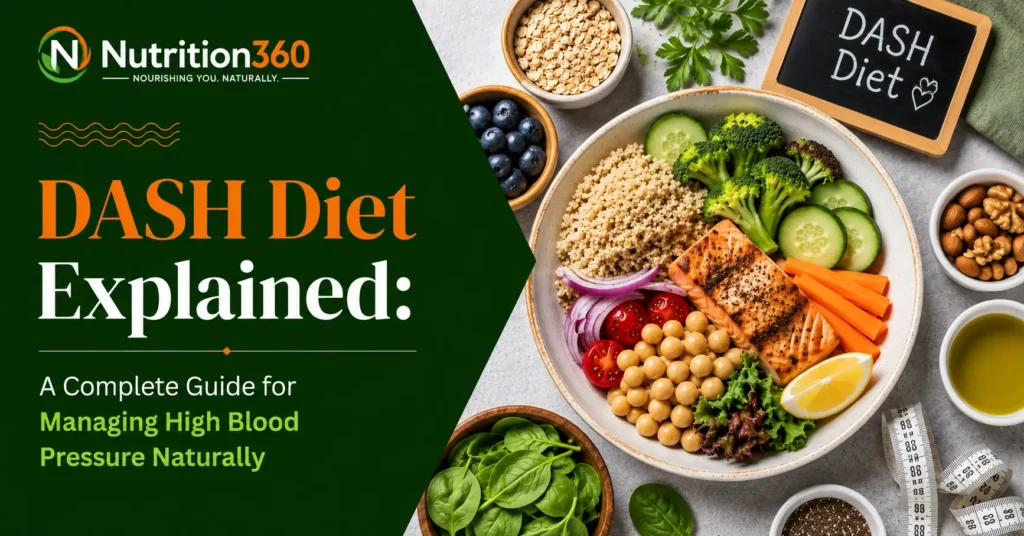
The DASH diet focuses on fresh fruits, vegetables, whole grains, pulses, nuts, seeds and low-fat dairy products. It also encourages reducing salt, processed foods, added sugar and unhealthy fats.
But can you follow the DASH diet while eating traditional Indian food?
Absolutely! You do not need to give up your regular roti, dal, rice, vegetables or homemade meals. With the right food choices and portion sizes, you can follow an Indian DASH diet plan that fits your everyday lifestyle.
In this guide, Nutrition360 explains the DASH diet, its benefits, foods to eat and avoid, and a practical 7-day Indian DASH diet chart for high blood pressure.
What Is the DASH Diet?
DASH stands for Dietary Approaches to Stop Hypertension. It is a scientifically studied healthy eating plan designed to help prevent and manage high blood pressure.
The DASH diet encourages foods that naturally provide important nutrients such as potassium, calcium, magnesium, fibre and protein. These nutrients support healthy blood pressure regulation and overall cardiovascular health.
Unlike restrictive diet plans, the DASH diet does not require special foods or expensive ingredients. It focuses on balanced meals using everyday foods.
The main principles of the DASH diet include:
- Eating more fresh fruits and vegetables.
- Choosing whole grains instead of refined grains.
- Including pulses, beans, lentils and legumes.
- Choosing low-fat milk, curd and other dairy products.
- Including unsalted nuts and seeds in moderate portions.
- Reducing salt and sodium intake.
- Limiting fried foods, packaged snacks and processed foods.
- Reducing added sugar and saturated fats.
According to the National Heart, Lung, and Blood Institute (NHLBI), the standard DASH eating plan uses a sodium limit of 2,300 mg per day, while a lower-sodium version targets 1,500 mg per day. Individual requirements should be discussed with a healthcare professional.
How Does the DASH Diet Help Manage High Blood Pressure?
Blood pressure is the force exerted by circulating blood against the walls of blood vessels. When it remains consistently elevated, it can increase the risk of heart disease, stroke and kidney complications.
The DASH diet supports blood pressure management through several nutritional approaches.
1. Helps Reduce Sodium Intake
Excessive sodium consumption can contribute to increased blood pressure, particularly in people who are salt-sensitive.
The DASH diet encourages reducing table salt and limiting high-sodium foods such as packaged snacks, pickles, papad, instant noodles and processed foods.
2. Provides Potassium-Rich Foods
Potassium helps balance the effects of sodium and supports normal blood pressure regulation.
Foods such as bananas, oranges, spinach, beans and vegetables provide potassium.
However, people with kidney disease or elevated blood potassium levels may need to restrict potassium-rich foods. They should follow individual medical advice.
3. Supports Healthy Blood Vessel Function
The DASH diet includes foods rich in magnesium, calcium and other essential nutrients that contribute to normal muscle and blood vessel function.
4. Supports Healthy Weight Management
Excess body weight can contribute to high blood pressure. A balanced DASH diet can help improve food quality, manage calorie intake and support gradual weight management.
5. Supports Overall Heart Health
A diet rich in fibre, vegetables, fruits, whole grains and unsaturated fats can support healthy cholesterol levels and reduce cardiovascular risk factors.
DASH Diet Food List: What to Eat and Avoid
Choosing the right foods is an important part of following an Indian DASH diet plan.
Foods to Include in the DASH Diet
Food category | Indian food examples |
Whole grains | Whole wheat roti, oats, brown rice, dalia, millet |
Vegetables | Spinach, lauki, tori, carrot, broccoli, beans, cucumber |
Fruits | Apple, guava, orange, papaya, pear, berries |
Pulses and legumes | Moong dal, masoor dal, rajma, chana, lobia |
Dairy products | Low-fat milk, plain curd, unsweetened buttermilk |
Nuts and seeds | Almonds, walnuts, flaxseeds, chia seeds |
Healthy fats | Small quantities of mustard, groundnut or olive oil |
Foods to Avoid or Limit in the DASH Diet
Some common Indian foods contain excessive sodium, saturated fat or added sugar.
Food | Why should you limit it? |
Pickles and achar | Often high in sodium |
Papad | Frequently contains added salt |
Namkeen and bhujia | High in sodium and often unhealthy fats |
Instant noodles | Often high in sodium |
Packaged soups | Can contain excessive sodium |
Processed cheese | May contain significant sodium and saturated fat |
Fried snacks | Can be high in calories and unhealthy fats |
Bakery products | May contain excess salt, sugar and saturated fat |
Sugary beverages | Add excess sugar without providing much nutrition |
Excessively salted chutneys and sauces | Can increase daily sodium intake |
You do not necessarily need to eliminate every favourite food. The goal is to make healthier choices consistently and keep portions appropriate.
7-Day Indian DASH Diet Plan for High Blood Pressure
Here is a sample vegetarian Indian DASH diet chart designed around familiar home-cooked meals.
The plan includes breakfast, mid-morning snacks, lunch, evening snacks and dinner.
Portions should be adjusted according to age, body weight, activity level, medical conditions and calorie requirements.
Day 1 – Balanced Start
Meal | Food options |
Early morning | 1 glass plain water |
Breakfast | 2 vegetable besan chillas with plain low-fat curd |
Mid-morning | 1 medium apple |
Lunch | 2 whole wheat rotis, 1 bowl moong dal, 1 bowl lauki sabzi and cucumber salad |
Evening snack | 5 almonds and 2 walnut halves |
Dinner | 1 bowl vegetable dalia with mixed vegetable raita |
Day 2 – Fibre-Rich Meals
Meal | Food options |
Early morning | Plain water |
Breakfast | 1 bowl vegetable dalia and 1 small bowl plain curd |
Mid-morning | 1 guava |
Lunch | 1 bowl brown rice, 1 bowl rajma, mixed vegetable salad |
Evening snack | Roasted unsalted chana |
Dinner | 2 whole wheat rotis, palak paneer prepared with low-fat paneer and cucumber salad |
Day 3 – Heart-Healthy Food Choices
Meal | Food options |
Early morning | Plain water |
Breakfast | 2 small vegetable moong dal chillas |
Mid-morning | 1 bowl papaya |
Lunch | 2 whole wheat rotis, 1 bowl masoor dal, bhindi sabzi and salad |
Evening snack | Unsalted roasted makhana |
Dinner | 1 bowl vegetable khichdi with plain low-fat curd |
Day 4 – Protein and Vegetable Focus
Meal | Food options |
Early morning | Plain water |
Breakfast | 2 small vegetable whole wheat cheelas with mint chutney prepared without excess salt |
Mid-morning | 1 medium orange |
Lunch | 2 whole wheat rotis, chana dal, cabbage and carrot sabzi |
Evening snack | 1 small bowl plain curd with ground flaxseeds |
Dinner | Vegetable soup prepared without excess salt, 1 bowl moong dal and 1–2 small rotis |
Day 5 – Balanced Indian Vegetarian Meals
Meal | Food options |
Early morning | Plain water |
Breakfast | 2 small vegetable idlis with homemade low-salt sambar |
Mid-morning | 1 medium pear |
Lunch | 2 whole wheat rotis, 1 bowl mixed dal, beans and carrot sabzi |
Evening snack | 5–6 unsalted almonds |
Dinner | 1 bowl vegetable millet khichdi with plain curd |
Day 6 – Nutrient-Rich Meals
Meal | Food options |
Early morning | Plain water |
Breakfast | 1 bowl vegetable oats-free dalia with vegetables |
Mid-morning | 1 medium apple |
Lunch | 2 whole wheat rotis, 1 bowl lobia curry, cucumber and tomato salad |
Evening snack | Roasted unsalted chana |
Dinner | 1 bowl mixed vegetable soup, 1 bowl moong dal and 1 small roti |
Day 7 – Simple and Healthy Meals
Meal | Food options |
Early morning | Plain water |
Breakfast | 2 small besan chillas with coriander chutney |
Mid-morning | 1 bowl papaya |
Lunch | 1 bowl brown rice, 1 bowl dal, seasonal vegetable sabzi and salad |
Evening snack | A small handful of unsalted mixed nuts |
Dinner | 2 whole wheat rotis, mixed vegetable curry and plain curd |
Important: This is an illustrative meal chart, not a prescribed medical diet. It is not a fixed-calorie or individually sodium-calculated plan. Choose unsalted ingredients, prepare meals with measured amounts of iodised salt, and avoid adding extra salt at the table. People with diabetes, kidney disease or other medical conditions may require modifications.
Best Indian Breakfast Options for High Blood Pressure
Breakfast is an opportunity to include fibre, protein and essential nutrients in your daily diet.
Here are some healthy Indian breakfast options suitable for a DASH-style eating pattern:
- Vegetable besan chilla with plain curd.
- Moong dal chilla with mint chutney.
- Vegetable dalia.
- Idli with homemade low-salt sambar.
- Whole wheat vegetable sandwich.
- Vegetable millet upma.
- Plain curd with fruit and unsalted seeds.
- Vegetable stuffed whole wheat roti with curd.
- Sprouts salad with lemon.
- Homemade vegetable poha prepared with limited salt.
Choose breakfast options based on your nutritional requirements, portion sizes and other medical conditions.
Best Fruits for High Blood Pressure
Fruits provide fibre, vitamins, minerals and antioxidants. Many fruits also contain potassium, which plays an important role in blood pressure regulation.
Some fruit options include:
- Banana
- Apple
- Orange
- Guava
- Papaya
- Pear
- Pomegranate
- Berries
- Muskmelon
Choose whole fruits instead of packaged fruit juices. Whole fruits provide fibre and are generally more filling.
People with diabetes should also consider the carbohydrate content and portion size of fruits. Those with kidney disease or potassium restrictions should consult their healthcare professional before increasing potassium-rich foods.
Best Vegetables for a DASH Diet
Vegetables are an important part of the DASH eating pattern because they provide fibre, vitamins, minerals and antioxidants.
Include a variety of seasonal vegetables such as:
- Spinach
- Lauki
- Tori
- Bhindi
- Broccoli
- Carrots
- Cabbage
- Cauliflower
- Beans
- Cucumber
- Capsicum
- Beetroot
Try to include vegetables in both lunch and dinner. Use different cooking methods such as steaming, sautéing and light cooking rather than deep-frying.
Indian Cooking Tips to Reduce Salt and Sodium
Following a low-sodium Indian diet does not mean eating tasteless food.
You can enhance flavour through natural herbs, spices and other ingredients.
Try these practical tips:
- Gradually reduce the amount of salt used while cooking.
- Use lemon juice to add freshness and flavour.
- Add garlic, ginger, coriander and mint.
- Use cumin, turmeric, black pepper and other spices without added salt.
- Avoid adding extra table salt to cooked food.
- Limit pickles, papad, namkeen and packaged snacks.
- Read nutrition labels before purchasing packaged foods.
- Prefer homemade chutneys and sauces with controlled salt.
- Reduce frequent consumption of restaurant and takeaway meals.
- Use fresh ingredients instead of heavily processed food products.
Remember that sodium is also present in packaged foods, sauces, bakery products and ready-to-eat meals. Reducing table salt alone may not be enough.
Is the DASH Diet Suitable for Indian Vegetarians?
Yes. The DASH diet can be adapted to an Indian vegetarian lifestyle.
Indian kitchens already have many foods that fit this eating pattern, including dal, rajma, chana, vegetables, fruits, whole wheat roti, millets, curd, nuts and seeds.
A vegetarian DASH diet should focus on:
- Adequate protein from dals, beans, legumes and low-fat dairy.
- Whole grains and fibre-rich foods.
- A variety of colourful vegetables.
- Whole fruits in suitable portions.
- Unsalted nuts and seeds.
- Reduced sodium and saturated fat.
A dietitian can help balance these food groups according to your individual nutritional needs.
Common Mistakes to Avoid While Following the DASH Diet
Even when people choose healthy foods, certain habits can make their diet less suitable for blood pressure management.
Avoid these common mistakes:
- Eating too much salt: Homemade meals can also contain excessive salt if it is added repeatedly during cooking.
- Depending on packaged healthy snacks: Some packaged foods marketed as healthy may still contain significant sodium.
- Drinking fruit juice instead of eating whole fruit: Whole fruits provide fibre and are generally a better everyday choice.
- Ignoring portion sizes: Even nutritious foods can contribute to excess calorie intake when portions are too large.
- Eating too few protein-rich foods: Include appropriate portions of dals, beans, curd, paneer or other suitable protein sources.
- Expecting immediate results: Healthy dietary changes need consistency. Blood pressure response varies between individuals.
- Stopping blood pressure medication: The DASH diet supports hypertension management but should never replace prescribed medication without medical supervision.
Lifestyle Tips Along with the DASH Diet
Diet is only one part of managing high blood pressure. Healthy lifestyle habits also matter.
- Exercise regularly, as advised by your healthcare professional.
- Maintain a healthy body weight.
- Get adequate sleep.
- Manage stress through relaxation, yoga or meditation.
- Avoid smoking and tobacco.
- Limit highly processed and salty foods.
- Monitor blood pressure regularly.
- Follow your prescribed medication schedule.
If your blood pressure is very high, particularly 180/120 mmHg or above, seek immediate medical advice. If accompanied by chest pain, breathlessness, weakness, vision changes or difficulty speaking, seek emergency medical care.
How Can a Dietitian Help You Follow the DASH Diet?
Following a general DASH diet chart may be a good starting point, but everyone’s nutritional needs are different.
A personalised diet plan can help account for:
- Current blood pressure readings.
- Age, weight and daily activity.
- Diabetes or blood sugar levels.
- Kidney function and other health conditions.
- Food preferences and dietary habits.
- Daily calorie and protein requirements.
- Salt and sodium intake.
At Nutrition360, nutrition guidance focuses on practical, balanced and sustainable food choices.
Whether you want support with high blood pressure, weight management, diabetes or overall wellness, a personalised nutrition plan can help you make informed food choices.
- Mansee
A balanced Indian diet for high blood pressure should include whole wheat roti, dal, seasonal vegetables, fruits, low-fat curd, nuts and seeds. Reduce salt, packaged snacks, pickles, papad and processed foods. The DASH diet is a well-researched eating pattern for supporting healthy blood pressure.
The Indian DASH diet plan adapts the original DASH eating pattern to everyday Indian meals. It includes dal, roti, brown rice, vegetables, fruits, sprouts, low-fat dairy, nuts and seeds while limiting sodium, processed foods and unhealthy fats.
Yes. Research shows that the DASH eating pattern can help reduce blood pressure. Its benefits are particularly useful when combined with reduced sodium intake, healthy body weight and regular physical activity.
People with high blood pressure should limit high-sodium foods such as pickles, papad, namkeen, packaged soups, instant noodles, processed meats, salty sauces and heavily processed snacks. They should also limit excess added sugar and saturated fats.
Yes. Whole wheat roti, brown rice and other whole grains can be included in a DASH diet. Portion sizes should be adjusted according to calorie requirements, physical activity and blood sugar levels.
Fruits such as apples, oranges, guava, papaya, pears and bananas can be included in a balanced diet. They provide fibre and essential nutrients. People with kidney disease or potassium restrictions should seek individual dietary advice.
Bananas contain potassium, which helps support normal blood pressure regulation. However, people with kidney disease or high blood potassium levels may need to limit bananas and other potassium-rich foods.
Plain, unsalted, low-fat curd can be included in a DASH-style diet. It provides calcium and protein. Avoid heavily salted raita, packaged flavoured curd and excessive salt additions.
Yes. Indian vegetarians can follow the DASH diet using dals, rajma, chana, lobia, vegetables, fruits, whole grains, low-fat dairy, nuts and seeds.
Healthy options include vegetable besan chilla, moong dal chilla, vegetable dalia, idli with low-salt sambar, whole wheat vegetable sandwiches and sprouts salad. Avoid adding excessive salt and processed sauces.
The World Health Organization recommends that adults consume less than 2,000 mg of sodium per day, equivalent to less than 5 grams of salt from all sources. Some people may need a different target based on medical advice.
The DASH diet can support weight management because it prioritises vegetables, fruits, whole grains and nutrient-rich foods. Weight loss depends on overall calorie intake, food portions and physical activity.
Yes. The DASH diet can be adapted for people with diabetes by selecting suitable whole grains, controlling carbohydrate portions, including adequate protein and choosing whole fruits in appropriate quantities. Individual meal planning is important.
Some research has observed improvements in blood pressure within a few weeks of following the DASH eating pattern. However, results vary depending on baseline blood pressure, sodium intake, medication, lifestyle and individual health conditions.
Not necessarily for everyone. The DASH diet includes potassium-rich foods, which may need to be restricted in people with certain kidney conditions or elevated potassium levels. Kidney patients should follow a diet plan designed according to their kidney function, blood test results and medical advice.
Yes. You can enjoy everyday Indian meals such as roti, dal, sabzi, khichdi, curd, sprouts and seasonal fruits. The key is to control salt, choose healthy cooking methods and maintain balanced portions.
No. Never stop or change prescribed blood pressure medication without consulting your doctor. The DASH diet is a complementary lifestyle approach, not a replacement for medical treatment.
You can consult a qualified dietitian in Noida for a personalised nutrition plan based on your blood pressure, weight, medical history, food preferences and lifestyle. Nutrition360 offers nutrition guidance for healthy eating and lifestyle management.
Get a Personalised Diet Plan from Nutrition360
Managing high blood pressure starts with consistent and informed lifestyle choices. A balanced diet, reduced sodium intake, regular physical activity and appropriate medical care can support better long-term health.
If you are looking for a practical Indian diet plan for high blood pressure, consult a qualified dietitian to understand your nutritional requirements.
Nutrition360 – Science-Backed Nutrition. Personalized for You.
Get personalised nutrition guidance from Mansee Chauhan, Dietitian & Nutritionist in Noida.
Visit: https://www.nutrition360.in/
Medical Disclaimer: This article is for general educational purposes only and should not be considered a substitute for medical advice, diagnosis or treatment. People with hypertension, diabetes, kidney disease or other medical conditions should consult their doctor and qualified dietitian before making significant dietary changes.
Other Blogs

Discover 15 nutritious Indian foods that support better gut health and digestion naturally. From curd, buttermilk and fermented foods to fibre-rich fruits, vegetables and whole...
Read More
Discover a practical 7-day Indian DASH diet plan for high blood pressure. Explore healthy Indian meals, low-sodium foods, breakfast ideas, foods to eat and avoid,...
Read More
Discover the best anti-inflammatory foods and learn how to reduce inflammation naturally through a balanced Indian diet. Explore 15 powerful foods, foods to avoid, health...
Read More
Mansee Chauhan is the Head Nutritionist at Nutrition360, Greater Noida West, dedicated to providing personalized, evidence-based nutrition guidance for individuals seeking sustainable improvements in their health and lifestyle. She focuses on creating practical diet plans tailored to individual health goals, dietary preferences, lifestyle patterns, and nutritional needs. Her areas of nutrition expertise include weight management, diabetes-friendly nutrition, gut health, hormonal wellness, fitness nutrition, and overall healthy living. Through personalized nutrition counselling and structured dietary guidance, Mansee Chauhan helps individuals develop healthier eating habits and make sustainable lifestyle changes for long-term well-being.