DASH Diet vs Mediterranean Diet for High Blood Pressure
Table of Contents
ToggleHigh blood pressure, or hypertension, is one of the most important risk factors for heart disease, stroke, kidney disease and other cardiovascular complications. Along with medication when prescribed, lifestyle changes can play an important role in managing blood pressure.
Two eating patterns frequently recommended for cardiovascular health are the DASH Diet and the Mediterranean Diet.
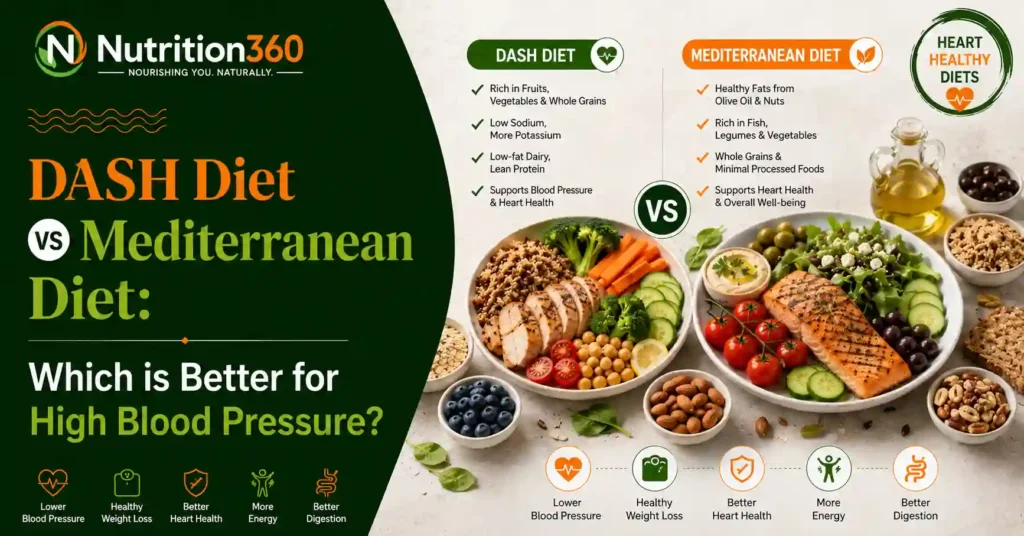
The DASH Diet—short for Dietary Approaches to Stop Hypertension—was specifically developed around dietary strategies that can help lower blood pressure. It emphasizes vegetables, fruits, whole grains, legumes, nuts, low-fat dairy and lean protein while limiting sodium, saturated fat and added sugars.
The Mediterranean Diet is a broader heart-healthy eating pattern based on vegetables, fruits, whole grains, beans, nuts, seeds, olive oil and other minimally processed foods, with fish and seafood commonly emphasized and red and processed meat limited.
So, which is better: DASH or Mediterranean Diet for high blood pressure?
The answer is not as simple as choosing one universal winner. Both can support cardiovascular health. DASH has particularly strong evidence for blood-pressure management and provides explicit guidance around sodium. At the same time, clinical research directly comparing DASH and Mediterranean-style eating suggests that both can reduce blood pressure, with results varying according to the exact dietary intervention and sodium intake.
The most useful question may therefore be: Which eating pattern can you follow consistently while meeting your individual blood-pressure, health and nutritional needs?
What is the DASH Diet?
DASH stands for Dietary Approaches to Stop Hypertension.
It is an eating pattern specifically designed to support blood-pressure management. The diet emphasizes foods that are naturally rich in potassium, calcium, magnesium and fibre while reducing sodium, saturated fat and foods high in added sugars.
Typical DASH-friendly foods include:
- Vegetables
- Fruits
- Whole grains
- Beans and lentils
- Nuts and seeds
- Low-fat dairy products
- Fish and poultry
- Lean protein
- Healthy plant-based foods
Foods high in sodium, saturated fat and added sugars are generally limited.
The original DASH clinical trial found that a diet rich in fruits, vegetables and low-fat dairy foods, with reduced saturated and total fat, lowered blood pressure compared with the control diet. Among participants with hypertension, the reduction was particularly pronounced.
How Does DASH Help Lower Blood Pressure?
DASH works through several dietary factors rather than one single food.
It generally encourages:
- More fruits and vegetables
- More potassium-rich foods
- More whole grains and legumes
- Adequate calcium and magnesium
- Less saturated fat
- Less sodium
- Less processed food
- Better overall diet quality
Sodium reduction is particularly important. The DASH-Sodium trial showed that both the DASH eating pattern and lower sodium intake reduced blood pressure, with the combination producing greater reductions than either approach alone.
More recent analysis of the DASH-Sodium trial, published in 2026, also found that a low-sodium DASH pattern significantly reduced 24-hour, awake and asleep blood pressure compared with a high-sodium control diet.
What is the Mediterranean Diet?
The Mediterranean Diet is a dietary pattern inspired by traditional eating habits in Mediterranean regions.
Rather than following a rigid menu, it focuses on the overall quality and composition of food.
The diet typically emphasizes:
- Vegetables
- Fruits
- Whole grains
- Beans and lentils
- Nuts
- Seeds
- Olive oil
- Fish and seafood
- Moderate amounts of dairy
- Limited red meat
- Limited processed meat
- Fewer highly processed foods
Extra-virgin olive oil is commonly used as a major source of dietary fat, while nuts, seeds and fish provide additional unsaturated fats.
How Can the Mediterranean Diet Support Blood Pressure?
The Mediterranean Diet can support cardiovascular health through its emphasis on plant foods, fibre, unsaturated fats and minimally processed foods.
However, following a Mediterranean-style diet does not automatically mean consuming very little sodium. Foods such as bread, cheese, sauces, canned foods, cured products and restaurant meals can still contribute substantial sodium.
For someone with hypertension, therefore, a Mediterranean eating pattern can be made more suitable for blood-pressure management by paying particular attention to sodium intake.
DASH Diet vs Mediterranean Diet: Key Differences
Although both diets emphasize whole and minimally processed foods, there are important differences.
Feature | DASH Diet | Mediterranean Diet |
Main focus | Blood-pressure management | Overall cardiovascular and metabolic health |
Vegetables | High intake | High intake |
Fruits | High intake | High intake |
Whole grains | Emphasized | Emphasized |
Beans and legumes | Emphasized | Emphasized |
Nuts and seeds | Recommended | Strongly emphasized |
Low-fat dairy | More prominent | Moderate |
Olive oil | Can be included | Major source of fat |
Fish | Recommended | Strong emphasis |
Red meat | Limited | Limited |
Processed meat | Limited | Limited |
Sodium | Explicitly addressed | Less central in traditional definitions |
Saturated fat | Limited | Generally limited |
Added sugars | Limited | Limited |
Potassium-rich foods | Strong emphasis | Naturally provided through plant foods |
Structure | More structured | More flexible |
Both patterns can be healthy. The key distinction is that DASH was developed specifically with blood pressure in mind, whereas the Mediterranean Diet represents a broader dietary pattern associated with cardiovascular health.
DASH Diet vs Mediterranean Diet for High Blood Pressure
Which Diet Lowers Blood Pressure More?
There is no scientifically justified answer that DASH is always better than Mediterranean eating—or vice versa—for every person with hypertension.
The DASH Diet has a particularly strong evidence base for blood-pressure reduction. In the original DASH trial, the combination diet reduced systolic blood pressure by 11.4 mmHg more than the control diet among participants with hypertension.
The DASH-Sodium trial subsequently demonstrated that reducing sodium and following DASH could produce greater blood-pressure reductions than either intervention alone.
However, direct comparison studies are more nuanced.
A randomized controlled trial involving adults with high-normal blood pressure or grade 1 hypertension compared salt restriction alone with salt restriction combined with DASH or Mediterranean eating. Both DASH and Mediterranean groups lowered blood pressure more than salt restriction alone. In that particular study, the Mediterranean group achieved a greater reduction in office systolic blood pressure, although DASH and Mediterranean eating did not differ significantly for office diastolic or 24-hour ambulatory blood pressure.
This is an important point: a single study should not be interpreted as proving that Mediterranean eating is universally superior to DASH.
Why Sodium Matters for Blood Pressure
Sodium is an important consideration for people with hypertension.
A diet high in sodium can contribute to higher blood pressure in salt-sensitive individuals. Reducing sodium intake can therefore be an important part of blood-pressure management.
The 2025 American Heart Association/American College of Cardiology high blood pressure guideline recommends lifestyle measures including a heart-healthy eating pattern such as DASH, reducing sodium intake and increasing dietary potassium intake when appropriate.
Common High-Sodium Foods in an Indian Diet
Some foods that can make sodium intake rise quickly include:
- Pickles
- Papad
- Namkeen
- Chips
- Salted nuts
- Instant noodles
- Packaged soups
- Processed cheese
- Sauces and ketchup
- Ready-to-eat meals
- Processed meats
- Restaurant and takeaway foods
You do not necessarily need to eliminate every one of these foods permanently, but people with hypertension should pay close attention to portion sizes, frequency and food labels.
Why Potassium Matters in a Blood-Pressure Diet
DASH places considerable emphasis on fruits, vegetables, legumes and other foods that naturally provide potassium.
Potassium is involved in fluid balance and normal blood-pressure regulation. Increasing potassium-rich foods can therefore be part of a heart-healthy eating pattern when medically appropriate.
Potassium-Rich Foods That Can Fit DASH
Examples include:
- Banana
- Orange
- Guava
- Papaya
- Tomato
- Spinach
- Beans
- Lentils
- Potatoes
- Sweet potatoes
- Plain yoghurt
However, more potassium is not automatically better for everyone.
People with chronic kidney disease, certain heart conditions or those taking medications that affect potassium levels may need individualized dietary advice. They should not deliberately increase potassium intake or use potassium-based salt substitutes without discussing it with their healthcare professional.
DASH Diet vs Mediterranean Diet: Which Foods Can You Eat?
Both diets can be adapted to Indian food habits.
Foods Common to Both Diets
Many foods fit comfortably into both patterns:
- Dal
- Rajma
- Chana
- Green vegetables
- Cauliflower
- Carrots
- Tomatoes
- Cucumber
- Fruits
- Whole wheat
- Brown rice
- Millets
- Nuts
- Seeds
- Plain curd
- Fish
- Lean poultry
The main difference is often how these foods are prepared.
For example, dal can be a healthy choice, but a preparation containing a large amount of salt, butter or ghee may not fit as well into a blood-pressure-focused meal.
DASH Diet vs Mediterranean Diet for Indian Food
This is where both diets can be made practical for Indian households.
DASH-Friendly Indian Meal Examples
Breakfast
- Vegetable besan chilla with plain curd
- Vegetable dalia
- Vegetable whole-wheat upma
- Moong dal chilla
- Whole-grain roti with vegetables
Lunch
- 2 whole-wheat rotis
- Dal
- Mixed vegetable sabzi
- Plain curd
- Salad
Evening Snack
- Unsalted roasted chana
- Fruit
- Unsalted nuts
- Plain yoghurt
Dinner
- Vegetable dal
- Whole-wheat roti
- Mixed vegetables
- Salad
Portion sizes should be individualized according to calorie requirements, weight goals, diabetes status and physical activity.
Mediterranean-Style Indian Meal Examples
The Mediterranean Diet does not require someone to eat traditional Mediterranean foods every day.
Its principles can be adapted to Indian cuisine.
For example:
Breakfast
- Vegetable omelette
- Whole-grain toast
- Fruit
- Unsweetened yoghurt
Lunch
- Dal or chickpeas
- Large vegetable salad
- Whole-grain roti
- Small amount of healthy oil
Snack
- Fruit
- Unsalted almonds or walnuts
Dinner
- Grilled fish or beans
- Cooked vegetables
- Whole grain
- Salad
For vegetarians, legumes, dairy, nuts and seeds can provide important protein sources.
DASH vs Mediterranean Diet for Weight Loss
Neither DASH nor Mediterranean eating is automatically a weight-loss diet.
Weight loss depends on factors including:
- Total calorie intake
- Portion sizes
- Food choices
- Protein intake
- Fibre intake
- Physical activity
- Sleep
- Long-term adherence
Both patterns can support weight management because they emphasize vegetables, fruits, whole grains, legumes and minimally processed foods.
However, calorie-dense foods such as nuts, seeds, oils and certain dairy products can contribute significant calories even though they are nutritious.
Therefore, portion control remains important if weight loss is the goal.
DASH vs Mediterranean Diet for Diabetes and High Blood Pressure
People who have both diabetes and hypertension need to consider blood glucose as well as blood pressure.
Both eating patterns can provide useful features:
- High vegetable intake
- More legumes
- More fibre
- Fewer highly processed foods
- Limited added sugars
- Better-quality carbohydrates
- Healthier fat sources
For people with diabetes, however, carbohydrate portions still matter.
For example, eating unlimited quantities of rice, roti, fruit or other carbohydrate-containing foods simply because they are part of a “healthy diet” may not be appropriate for everyone.
A personalized plan can consider blood glucose levels, medications, weight, activity and other medical factors.
DASH vs Mediterranean Diet for Cholesterol and Heart Health
Both diets can support cardiovascular health, but their emphasis differs.
DASH focuses strongly on:
- Fruits and vegetables
- Whole grains
- Low-fat dairy
- Lean protein
- Lower saturated fat
- Lower sodium
Mediterranean eating places greater emphasis on:
- Olive oil
- Nuts
- Seeds
- Fish
- Plant foods
- Unsaturated fats
- Minimally processed foods
A randomized comparison study also found that both DASH and Mediterranean eating, when combined with salt restriction, improved several cardiometabolic measures compared with minimal intervention.
Which Diet Is Easier to Follow Long Term?
The healthiest diet is often the one that you can follow consistently.
DASH may be a good fit if:
- Your primary concern is high blood pressure
- You want clear guidance around sodium
- You enjoy fruits and vegetables
- You eat dairy
- You prefer a more structured eating pattern
Mediterranean eating may be a good fit if:
- You enjoy vegetables and legumes
- You like nuts and seeds
- You prefer olive oil and other unsaturated fats
- You eat fish
- You want a flexible overall heart-healthy eating pattern
Can You Combine DASH and Mediterranean Principles?
Yes.
There is considerable overlap between the two.
A practical approach could include:
DASH principles
- lower sodium
- potassium-rich foods where appropriate
- plenty of vegetables and fruits
- whole grains and legumes
Mediterranean principles
- olive oil
- nuts and seeds
- fish
- minimally processed foods
Together, these principles can form a flexible heart-healthy eating pattern.
So, Which Is Better: DASH or Mediterranean Diet?
For someone specifically looking to manage high blood pressure, DASH is an especially well-established option because it was developed specifically for hypertension and has extensive evidence supporting blood-pressure reduction.
The Mediterranean Diet is also a strong option for cardiovascular health and can support blood-pressure management, particularly when attention is paid to sodium intake.
Research comparing the two does not justify declaring one diet the universal winner. In a randomized trial conducted with salt restriction, both diets reduced blood pressure, while the Mediterranean group had a larger reduction in office systolic blood pressure in that particular study.
Therefore, the better diet may be the one that:
- You can follow consistently
- Provides plenty of vegetables and fruits
- Includes adequate fibre and protein
- Limits highly processed foods
- Keeps sodium intake under control
- Fits your cultural and food preferences
- Can be maintained long term
If you have hypertension, diabetes, kidney disease, heart disease or take medication that affects sodium or potassium, consult a qualified healthcare professional or registered dietitian before making major dietary changes.
Diet can support blood-pressure management, but it should not be used as a replacement for prescribed medication without medical advice.
DASH Diet vs Mediterranean Diet: Quick Comparison
Goal | Potentially Better Fit |
Specific focus on blood pressure | DASH |
Sodium reduction | DASH |
Overall heart health | Both |
Plant-rich eating | Both |
Flexible eating pattern | Mediterranean |
Strong emphasis on olive oil | Mediterranean |
Strong emphasis on low-fat dairy | DASH |
Potassium-rich foods | Both |
Indian vegetarian adaptation | Both |
Long-term sustainability | Depends on individual preference |
Diabetes + hypertension | Either, with personalization |
Weight management | Either, depending on calorie intake and adherence |
- Mansee
DASH has particularly strong evidence for lowering blood pressure because it was specifically developed for hypertension. However, the Mediterranean Diet can also support blood-pressure management. Direct comparison research does not establish one diet as universally superior for every person.
The response depends on the individual and the exact diet used. DASH has strong clinical evidence for reducing blood pressure, particularly when combined with sodium reduction. A randomized trial comparing DASH and Mediterranean diets under salt restriction found both reduced blood pressure.
Yes. There is substantial overlap between the two. You can follow DASH principles such as sodium reduction and increased fruits and vegetables while incorporating Mediterranean foods such as olive oil, nuts, seeds and fish.
Not necessarily. Traditional Mediterranean-style eating emphasizes healthy foods, but sodium intake depends on food choices and preparation. Bread, cheese, sauces, cured foods and packaged products can increase sodium intake. People with hypertension should pay attention to sodium even when following a Mediterranean eating pattern.
Yes. DASH can be adapted to Indian foods such as dal, rajma, chana, vegetables, fruits, whole-wheat roti, brown rice, curd, nuts and seeds. The important considerations include portion size, cooking methods and limiting high-sodium foods such as pickles, papad, namkeen and packaged snacks.
Yes. Mediterranean-style eating can support cardiovascular health and blood-pressure management. Its benefits are strongest when the overall pattern is nutrient-dense and sodium intake is also controlled.
Neither diet guarantees weight loss. Weight reduction depends largely on total calorie intake, portion sizes, physical activity and long-term adherence. Both patterns can support healthy weight management when portions and total calorie intake are appropriate.
Both can be adapted for people with diabetes and hypertension. A suitable plan should emphasize vegetables, legumes, whole grains, fibre and minimally processed foods while controlling sodium and carbohydrate portions. Individual requirements depend on medications, glucose levels, weight and other health conditions.
Yes. Rice can be included in a DASH-style diet, preferably in appropriate portions and alongside vegetables, legumes and a protein source. Whole-grain options can provide more fibre than refined rice.
Yes. Whole-grain roti can fit into a Mediterranean-style Indian eating pattern. Portion size and the overall meal composition are important.
People with high blood pressure should generally limit high-sodium and highly processed foods. Examples include excessive pickles, papad, namkeen, chips, processed meats, instant noodles, packaged soups and salty sauces. Individual dietary advice may vary.
No. DASH can include fish, poultry and other lean protein sources. However, it can also be adapted into a vegetarian or predominantly plant-based eating pattern using beans, lentils, dairy, nuts and seeds.
You should seek individualized medical and nutrition advice. DASH contains many potassium-rich foods, and some people with kidney disease may need to modify potassium, phosphorus, protein, sodium or fluid intake depending on kidney function and treatment.
Dietary changes can help lower blood pressure, but they do not automatically eliminate the need for medication. If you are taking antihypertensive medication, do not stop or change your dose without speaking with your doctor.
Blood pressure can respond to dietary changes relatively quickly, but the degree of improvement varies. Clinical trials have demonstrated meaningful reductions during structured interventions. Long-term benefit depends on maintaining the dietary pattern and other healthy lifestyle habits.
Final Takeaway
DASH and Mediterranean diets are both evidence-based approaches that can support cardiovascular health.
If your primary goal is high blood pressure management, DASH offers particularly direct guidance on sodium, potassium-rich foods and dietary patterns associated with lower blood pressure.
If you prefer a more flexible approach emphasizing vegetables, legumes, nuts, seeds, olive oil and fish, the Mediterranean Diet may be easier to sustain.
For many people, the most practical solution is not choosing one over the other but combining their strongest features: more plant foods, whole grains and legumes; healthier fats; adequate fibre; less processed food; and careful sodium intake.
If you have hypertension or another medical condition, consider working with a doctor or registered dietitian to personalize your eating plan.
Other Blogs
Discover a practical PCOS diet plan for women in Noida Extension with balanced Indian meals, vegetarian options, healthy food choices, and easy tips for managing...
Read More
Discover a practical PCOS diet plan for women in Noida Extension with balanced Indian meals, vegetarian options, healthy food choices, and easy tips for managing...
Read More
Looking for a fatty liver dietitian in Noida? Discover the best foods to eat and avoid, Indian diet tips, healthy meal choices, and practical nutrition...
Read More
Mansee Chauhan is the Head Nutritionist at Nutrition360, Greater Noida West, dedicated to providing personalized, evidence-based nutrition guidance for individuals seeking sustainable improvements in their health and lifestyle. She focuses on creating practical diet plans tailored to individual health goals, dietary preferences, lifestyle patterns, and nutritional needs. Her areas of nutrition expertise include weight management, diabetes-friendly nutrition, gut health, hormonal wellness, fitness nutrition, and overall healthy living. Through personalized nutrition counselling and structured dietary guidance, Mansee Chauhan helps individuals develop healthier eating habits and make sustainable lifestyle changes for long-term well-being.