PCOS Diet Plan for Women in Noida Extension: Indian Meals and Practical Tips
Table of Contents
ToggleLiving with PCOS can make everyday food choices feel confusing. Should you stop eating rice? Is fruit allowed? Do you need a separate meal from the rest of your family?
A practical PCOS diet plan in Noida Extension should help you answer these questions without turning every meal into a restriction. It should fit your health needs, food preferences, working hours and budget.
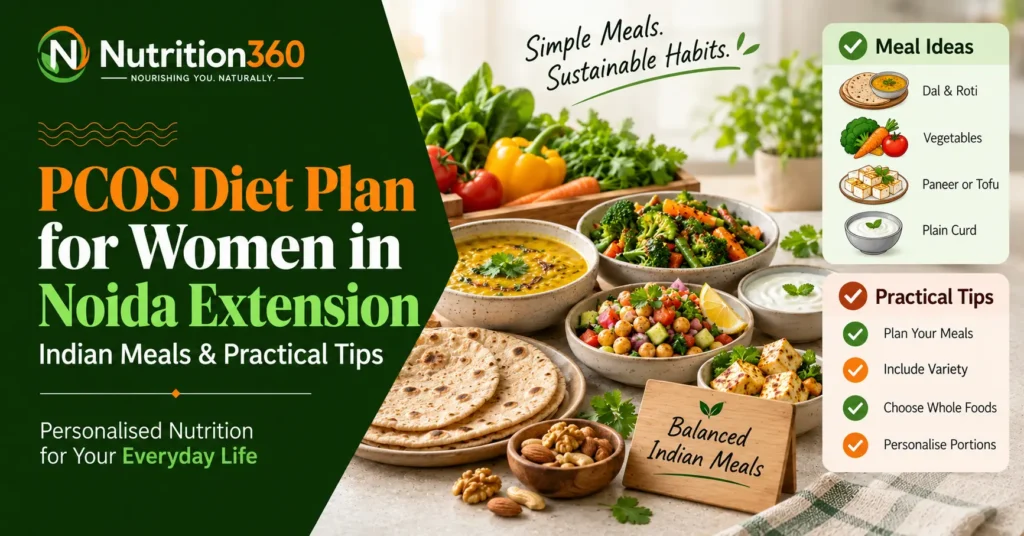
For women in Noida Extension, also known as Greater Noida West, familiar Indian meals can form the foundation of a balanced eating routine. Dal, roti, vegetables, curd, beans, eggs and other everyday foods can be combined in ways that make meal planning easier.
At Nutrition360, personalised nutrition guidance can help you move from general advice to a routine you can follow alongside your doctor’s PCOS treatment.
How Does Nutrition Fit Into PCOS Management?
Polycystic ovary syndrome, commonly called PCOS, can involve irregular periods, increased androgen levels and metabolic concerns. Insulin resistance is common, although individual symptoms and health needs differ.
Nutrition is one part of management, together with physical activity, sleep, emotional wellbeing and medical care when needed. Healthy lifestyle changes can offer benefits even without weight loss.
There is no single diet composition proven best for everyone with PCOS. International guidance supports sustainable eating patterns tailored to individual preferences and goals, rather than unnecessarily restrictive diets.
For you, that could mean improving breakfast, preparing a more balanced office lunch or finding an evening snack that works better than biscuits and tea.
What Should a Practical Indian Diet Plan for PCOS Include?
A useful starting point is regular, balanced meals with fibre-rich carbohydrates, protein sources, vegetables and moderate amounts of unsaturated fats. The British Dietetic Association recommends focusing on foods you can include, rather than building a long list of restrictions.
Here are practical ways to apply that approach to Indian meals.
1. Give Protein a Clear Place in Your Meals
Look at each main meal and identify its protein source.
For example:
- Add curd or paneer to a vegetable breakfast.
- Include dal, rajma or chole with lunch.
- Use tofu, eggs, fish or chicken at dinner according to your preferences.
- Keep roasted chana available for a convenient snack.
A vegetarian PCOS diet plan does not have to depend on protein powders. Start by reviewing what your usual meals already contain and where an additional protein food would be useful.
2. Build Meals Around Variety
Instead of eating only roti and pickle or rice with a small amount of gravy, try combinations such as:
Usual meal | A more varied meal idea |
Roti and pickle | Roti, dal and seasonal sabzi |
Plain rice | Rice, rajma and cucumber salad |
Toast and tea | Wholegrain toast, egg or tofu bhurji, and tomato |
A large bowl of noodles | Vegetable noodles with tofu, egg or chicken |
Biscuits as an evening meal | Plain curd with fruit, or roasted chana with vegetables |
These are meal-building examples, not fixed prescriptions. Portions should reflect your appetite, activity, health conditions and overall requirements.
3. Keep Carbohydrates in Perspective
A PCOS diet does not automatically require eliminating carbohydrates. Higher-fibre choices such as whole grains, pulses and beans can be included alongside protein and vegetables.
Rather than asking only, “Can I eat rice?”, consider:
- How much rice is on my plate?
- What am I eating with it?
- Does the meal include vegetables and a protein source?
- Does the portion suit my needs?
This makes the discussion more useful than labelling a familiar food “good” or “bad.”
Indian Breakfast Ideas for PCOS
Breakfast is often the first meal affected by a busy morning. Keep two or three options ready so you do not have to decide from scratch every day.
Breakfast idea | Suggested combination |
Moong dal chilla | Vegetable-filled chilla with plain curd |
Besan chilla | Chilla with paneer or tofu filling |
Egg breakfast | Vegetable omelette with wholegrain toast |
Idli breakfast | Idli with sambar and a vegetable side |
Paneer or tofu bhurji | Bhurji with roti and sliced cucumber |
Vegetable poha | Poha with peas and peanuts, accompanied by curd |
Choose the foods you enjoy and tolerate. There is no need to force yourself to eat a particular breakfast simply because it appears in a diet chart.
PCOS Lunch Ideas for Home and Office
For working women in Noida Extension, lunch needs to be practical enough to pack, carry and eat during the day.
Consider these combinations:
- Whole-wheat roti, mixed vegetables and dal.
- Rajma, rice and cucumber salad.
- Chole, roti and a seasonal vegetable.
- Tofu or paneer bhurji with roti and cooked vegetables.
- Egg curry, rice and beans or cabbage.
- Chicken or fish with roti and vegetables, if you eat non-vegetarian food.
If you share meals with your family, start with the same basic dishes. Adjusting combinations and portions is often more manageable than preparing a completely separate “PCOS meal.”
For office lunches, pack curd separately and refrigerate perishable foods appropriately.
Healthy Indian Snacks for PCOS
Snacks can be useful when there is a long gap between meals, but you do not need to eat them automatically when you are not hungry.
Easy options include:
- Roasted chana.
- Plain curd with chopped fruit.
- A boiled egg with cucumber.
- A small serving of unsalted nuts.
- Cooked chana chaat with tomato and lemon.
- Paneer or tofu cubes with vegetables.
Keep a snack available on days with late meetings or long commutes. Planning ahead can reduce the need to make a hurried choice when you are already very hungry.
PCOS Dinner Ideas Without Complicated Cooking
Dinner can reuse ingredients prepared earlier in the day.
For example:
Ingredient already available | Dinner idea |
Cooked dal | Dal, roti and sautéed vegetables |
Boiled chickpeas | Chickpea and vegetable bowl with curd |
Paneer or tofu | Bhurji with roti and salad |
Chopped vegetables | Vegetable-and-dal khichdi with curd |
Eggs | Egg curry with vegetables and rice |
Cooked chicken | Chicken and vegetable wrap |
Avoid treating dinner as a punishment for something eaten earlier. Aim for a meal that is satisfying and appropriate for your needs.
Sample One-Day Indian PCOS Meal Plan
The following example shows how ordinary foods can fit together. It is not a personalised diet prescription, and it does not specify calories or fixed portions.
Meal | Example |
Breakfast | Moong dal chilla with vegetables and plain curd |
Mid-morning, if hungry | One serving of whole fruit |
Lunch | Roti, dal, seasonal sabzi and salad |
Evening snack, if needed | Roasted chana or plain curd |
Dinner | Tofu or paneer bhurji, vegetables and roti |
Drinks | Water; tea or coffee with little or no added sugar, according to tolerance |
An individual plan may need different meal timings and portions, particularly if you have diabetes, take glucose-lowering medicines, are pregnant or have another health condition.
Foods to Limit With PCOS
There is no need for a universal forbidden-food list. However, it is sensible to review frequent sugary drinks, large portions of sweets and heavily processed snack foods. Whole fruit, fibre-rich foods and balanced meals are generally more useful everyday choices.
Try practical changes:
- Replace a daily sweetened drink with water or an unsweetened alternative.
- Serve snacks in a bowl instead of eating directly from a large packet.
- Decide which treats you most enjoy and include them intentionally.
- Avoid letting “diet” or “sugar-free” labels replace checking the actual ingredients and serving size.
You do not have to achieve perfect eating to build a more consistent routine.
PCOS Diet for Weight Management
Weight loss is not the right goal for every woman with PCOS. Where appropriate, weight management should be individualised and supported without blame or unrealistic promises.
Crash diets, rigid food rules and guaranteed “PCOS reversal” timelines are not a sound basis for care. Treatment goals should also consider metabolic health, symptoms and quality of life—not only the weighing scale.
When reviewing your routine, useful questions include:
- Am I regularly missing meals because of work?
- Do my meals leave me satisfied?
- Is my plan affordable and manageable?
- Have I become anxious about eating particular foods?
- Can I maintain these habits during weekends and family occasions?
Share these answers with your dietitian. They can make a consultation more productive than simply reporting your weight.
Practical Tips for Working Women in Noida Extension
Plan Three Reliable Meals
Choose a few breakfasts, lunches and dinners that fit your household. A short, repeatable menu can be easier to maintain than a different recipe every day.
Prepare Ingredients in Advance
Keep cooked pulses, washed vegetables and suitable protein foods ready. Store them safely and prepare quantities you can use promptly.
Plan for Office and Travel Days
Carry lunch when practical, identify suitable takeaway combinations and keep a backup snack. Your plan should account for busy days rather than assume they will not happen.
Make Local Shopping Simple
Build your grocery list around available seasonal vegetables, pulses, curd, whole grains and your preferred protein foods. Expensive imported products are not essential to making everyday meals more varied.
Review What Actually Works
If a meal is repeatedly skipped or a recipe is too time-consuming, change the plan. A useful routine should fit your life in Gaur City, Techzone 4, Bisrakh or elsewhere in Greater Noida West.
Personalised PCOS Diet Guidance at Nutrition360
If you are looking for a PCOS dietitian in Noida Extension, bring your everyday food questions to the consultation.
You can discuss:
- Your usual meals and food preferences.
- Work hours, cooking arrangements and budget.
- Vegetarian, egg-inclusive or non-vegetarian options.
- Medical reports and prescribed treatment.
- Previous diet attempts and difficulties.
- Your goals and preferred follow-up arrangements.
Explore Nutrition360’s PCOS/PCOD Diet Program for nutrition support, or visit the Noida Extension consultation page for local information.
- Mansee
There is no single best diet for everyone with PCOS. A sustainable pattern suited to your health, preferences and goals is more useful than following a rigid plan because it is advertised as a “PCOS diet.”
Yes, these foods can fit into a balanced meal pattern. Discuss suitable portions and combinations with your dietitian, particularly if you also have blood-glucose concerns.
Examples include moong dal chilla with curd, besan chilla with tofu, or eggs with wholegrain toast. Choose options that suit your preferences and morning routine.
Yes. Vegetarian meal planning can use pulses, beans, tofu, dairy where suitable, nuts and seeds. The plan should still provide enough food and variety for your individual needs.
PCOS does not automatically mean avoiding whole fruit. Consider portions and overall meal balance, especially if you have diabetes or receive specific medical advice.
No. PCOS care should be individualised, and healthy habits can be beneficial without weight loss. Discuss appropriate goals with your healthcare team.
No. It is an example of meal combinations, not a calorie-controlled prescription. Your portions, meal timings and food choices may need adjustment.
No. Nutrition supports care but does not replace medication or medical follow-up. Do not stop or change prescribed treatment without consulting your doctor.
You can contact Nutrition360 to discuss a personalised PCOS diet plan in Noida Extension, also known as Greater Noida West. Confirm consultation availability and whether online or in-clinic appointments suit your needs.
Bring available medical reports, your prescription list and a brief record of your usual meals. Note your main concerns, food preferences and any difficulties with previous plans.
Make Your PCOS Meal Plan Work for Your Everyday Life
You deserve nutrition guidance that makes eating clearer and more manageable.
Whether you need Indian meal ideas, help organising office lunches or guidance on vegetarian food choices, Nutrition360 can help you discuss practical next steps.
Book a personalised diet consultation with Nutrition360 and start building an eating routine around your health needs, preferences and lifestyle.
This article provides general nutrition information and does not replace individual medical advice. PCOS diagnosis and treatment should be guided by your treating doctor.
Other Blogs
Discover a practical PCOS diet plan for women in Noida Extension with balanced Indian meals, vegetarian options, healthy food choices, and easy tips for managing...
Read More
Discover a practical PCOS diet plan for women in Noida Extension with balanced Indian meals, vegetarian options, healthy food choices, and easy tips for managing...
Read More
Looking for a fatty liver dietitian in Noida? Discover the best foods to eat and avoid, Indian diet tips, healthy meal choices, and practical nutrition...
Read More
Mansee Chauhan is the Head Nutritionist at Nutrition360, Greater Noida West, dedicated to providing personalized, evidence-based nutrition guidance for individuals seeking sustainable improvements in their health and lifestyle. She focuses on creating practical diet plans tailored to individual health goals, dietary preferences, lifestyle patterns, and nutritional needs. Her areas of nutrition expertise include weight management, diabetes-friendly nutrition, gut health, hormonal wellness, fitness nutrition, and overall healthy living. Through personalized nutrition counselling and structured dietary guidance, Mansee Chauhan helps individuals develop healthier eating habits and make sustainable lifestyle changes for long-term well-being.