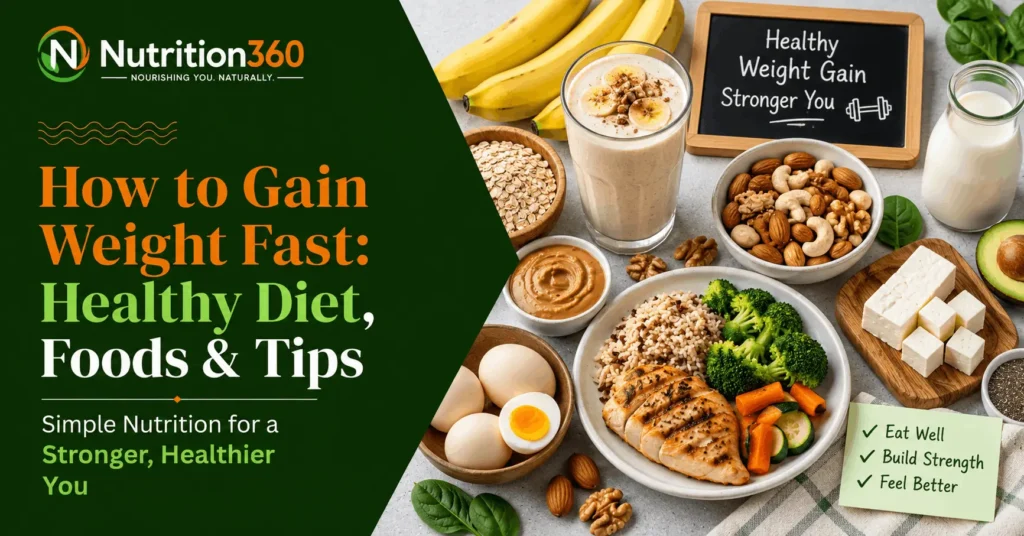
How to Gain Weight Fast: Healthy Diet, Foods & Tips
Table of Contents
ToggleGaining weight may sound simple—just eat more food. But healthy weight gain is not about filling your diet with fried foods, sweets, sugary drinks, and processed snacks. The goal should be to increase your calorie and nutrient intake in a balanced way so that you gain lean body mass while supporting your overall health.
If you are underweight, have a poor appetite, struggle to build muscle, or simply want to know how to gain weight fast naturally, the right combination of calorie-rich foods, adequate protein, strength training, proper sleep, and meal planning can help.
A well-designed weight gain diet focuses on nutritious foods that provide calories along with protein, healthy fats, complex carbohydrates, vitamins, and minerals.
This guide explains how to gain healthy weight, the best foods to include, what to avoid, and practical tips that can make a weight gain plan easier to follow.
What Is Healthy Weight Gain?
Healthy weight gain means gradually increasing body weight through adequate nutrition while aiming to support muscle mass, energy levels, strength, and overall health.
Simply consuming large quantities of junk food may increase body weight, but it can also increase saturated fat, added sugar, and excess body fat without providing balanced nutrition.
A healthy weight gain diet should generally include:
- Adequate calories
- Protein-rich foods
- Complex carbohydrates
- Healthy fats
- Fruits and vegetables
- Calcium-rich foods
- Nuts and seeds
- Adequate fluids
- Regular strength or resistance exercise
The exact calorie and protein requirements differ from person to person depending on age, sex, height, current weight, activity level, medical history, and weight gain goals.
Why Am I Not Gaining Weight?
Some people naturally have a smaller body frame or higher energy requirements. In other cases, difficulty gaining weight may be associated with lifestyle, nutritional, digestive, hormonal, or medical factors.
Common reasons may include:
- Not consuming enough calories
- Poor or irregular appetite
- Skipping meals
- Very high physical activity
- Inadequate protein intake
- Stress or disturbed sleep
- Digestive problems
- Certain thyroid or other medical conditions
- Chronic illness
- Some medications
- Difficulty absorbing nutrients
If you are losing weight without trying, have experienced a significant change in appetite, or remain underweight despite eating adequately, consult a doctor or qualified healthcare professional. The underlying reason should be evaluated rather than relying only on a high-calorie diet.
How to Gain Weight Fast in a Healthy Way
If you are wondering how to gain weight quickly, start by improving the nutritional density of your existing diet instead of simply increasing portion sizes dramatically.
1. Create a Moderate Calorie Surplus
Weight generally increases when your calorie intake consistently exceeds your energy expenditure.
However, you don’t need to consume extremely large meals or excessive calories.
A moderate calorie surplus combined with nutritious foods and resistance exercise is generally a more sensible approach to healthy weight gain.
Your actual calorie target should be personalized according to your body composition, activity level, health conditions, and progress.
2. Eat More Frequently
People with a small appetite may find it difficult to finish three large meals.
Instead, try:
3 main meals + 2–3 nutritious snacks
For example:
Breakfast → Mid-morning snack → Lunch → Evening snack → Dinner → Optional bedtime snack
Eating every few hours can make it easier to increase your total daily calorie and nutrient intake.
3. Include Protein in Every Major Meal
Protein plays an important role in maintaining and building muscle.
Good protein-rich foods for weight gain include:
- Eggs
- Milk
- Curd
- Greek yogurt or thick curd
- Paneer
- Tofu
- Soy products
- Dal
- Chickpeas
- Rajma
- Lentils
- Fish
- Chicken
- Lean meat
- Nuts and seeds
Protein requirements vary, particularly for people who exercise regularly. A dietitian can help determine an appropriate target based on body weight, activity level, and health status.
4. Choose Healthy High-Calorie Foods
One of the easiest ways to follow a weight gain diet is to increase the calorie density of meals.
Instead of relying on foods that provide mostly sugar or unhealthy fats, choose nutrient-rich, healthy high-calorie foods.
Examples include:
- Nuts
- Nut butter
- Seeds
- Paneer
- Cheese in suitable portions
- Full-fat curd or yogurt
- Milk
- Eggs
- Avocado
- Dates and other dried fruits
- Whole grains
- Rice
- Potatoes and sweet potatoes
- Olive oil
- Homemade smoothies
These foods can help increase calorie intake without requiring very large portions.
Best Foods to Gain Weight Naturally
The best foods to gain weight provide a combination of calories, protein, carbohydrates, healthy fats, vitamins, and minerals.
1. Milk and Dairy Products
Milk can provide protein, carbohydrates, fat, calcium, and several important nutrients.
You can include:
- Milk
- Curd
- Paneer
- Greek yogurt
- Cheese in moderation
A homemade smoothie containing milk, banana, nuts, seeds, and nut butter can be a convenient high-calorie snack.
2. Nuts and Nut Butter
Nuts are among the most convenient calorie-rich foods.
Try:
- Almonds
- Walnuts
- Cashews
- Peanuts
- Pistachios
Natural peanut or almond butter can be added to toast, fruit, smoothies, or yogurt.
Because nuts contain substantial calories in a relatively small serving, they can be particularly helpful for people with a low appetite.
3. Eggs
Eggs provide high-quality protein along with fats and several micronutrients.
They can be included as:
- Boiled eggs
- Omelettes
- Egg sandwiches
- Egg bhurji
- Eggs with whole-grain toast
4. Paneer and Tofu
For vegetarians, paneer and tofu can be useful additions to a healthy diet for weight gain.
Meal options include:
- Paneer bhurji
- Paneer sandwiches
- Tofu stir-fry
- Paneer with roti
- Tofu rice bowls
5. Rice
Rice is an easy source of carbohydrates and can help increase overall calorie intake.
Pair it with protein and vegetables rather than eating it alone.
Examples:
- Rice + dal + vegetables + curd
- Rice + rajma + salad
- Rice + paneer + vegetables
- Rice + chicken/fish + vegetables
6. Potatoes and Sweet Potatoes
Potatoes and sweet potatoes provide carbohydrates and can easily be incorporated into regular Indian meals.
Try combining them with a protein source such as paneer, eggs, curd, dal, chicken, or fish.
7. Bananas
Bananas are affordable, portable, and easy to combine with calorie-dense ingredients.
Try:
Banana + milk + peanut butter + nuts/seeds
This can make a convenient homemade weight gain smoothie.
8. Dried Fruits
Dates, raisins, dried figs, and other dried fruits provide concentrated carbohydrates and calories.
Combine dried fruits with nuts or yogurt to make a more balanced snack.
9. Whole Grains
Useful options include:
- Whole-wheat roti
- Brown or white rice depending on individual needs
- Whole-grain bread
- Dalia
- Millet
- Quinoa
Pair carbohydrates with protein and healthy fats to improve the nutritional quality of meals.
10. Healthy Fats
Fats provide more calories per gram than protein or carbohydrates, making them useful when trying to increase calorie intake.
Sources include:
- Nuts
- Seeds
- Nut butter
- Avocado
- Olive oil
- Groundnut oil
- Other suitable cooking oils
Use oils and fats in appropriate amounts rather than turning every meal into a fried meal.
High-Calorie Foods for Weight Gain
Here are practical weight gain foods for adults that can be included in everyday meals:
Food | Why It Can Help |
Nuts | Calorie-dense and contain healthy fats |
Peanut butter | Provides calories, fat and protein |
Paneer | Provides protein and calories |
Eggs | High-quality protein and nutrients |
Milk | Provides protein, carbohydrates and fat |
Greek yogurt/thick curd | Protein-rich and easy to combine with fruit |
Banana | Convenient carbohydrate source |
Dates | Concentrated source of calories |
Rice | Easy way to increase carbohydrate intake |
Potatoes | Affordable carbohydrate source |
Seeds | Provide fats, protein and micronutrients |
Avocado | Energy-dense source of unsaturated fats |
Homemade smoothies | Easy way to increase calories and nutrients |
The ideal foods and portion sizes should depend on your dietary preferences, digestive tolerance, activity, and health conditions.
Sample Weight Gain Diet Plan
Here is an example of how a balanced weight gain meal plan may look.
Early Morning
- Milk or another suitable protein-containing beverage
- 4–6 soaked almonds
- 1–2 walnuts
- 1–2 dates
Breakfast
Choose one:
- 2–3 paneer parathas + curd
- Egg omelette + whole-grain toast + milk
- Paneer sandwich + fruit + milk
- Dalia with milk, nuts, and seeds
Mid-Morning Snack
- Banana + peanut butter
OR
- Fruit + yogurt + nuts
OR
- Homemade banana-nut smoothie
Lunch
- 2–3 rotis and/or rice
- Dal/rajma/chole
- Paneer/tofu/eggs/chicken/fish
- Cooked vegetables
- Curd
- Salad
Evening Snack
Choose one:
- Peanut butter sandwich
- Paneer sandwich
- Boiled eggs + toast
- Yogurt + fruit + nuts
- Roasted chana + nuts
Dinner
- 2–3 rotis or rice
- Dal
- Paneer/tofu/eggs/chicken/fish
- Cooked vegetables
- Curd, if suitable
Before Bed
Depending on individual calorie needs:
- Milk
OR
- Yogurt with nuts
This is only a general example. A personalized weight gain diet plan should account for your calorie requirements, dietary preferences, medical conditions, exercise schedule, and current nutritional status.
How to Gain Weight at Home
You do not necessarily need expensive supplements or specialized foods to gain weight.
Many everyday Indian foods can support a natural weight gain plan.
For example, you can increase the nutritional value of meals by:
- Adding paneer to sandwiches and rotis
- Adding nuts and seeds to yogurt
- Using peanut butter with toast or fruit
- Adding curd to lunch
- Drinking homemade smoothies between meals
- Pairing dal with rice or roti
- Adding eggs, paneer, tofu, fish, or chicken to meals
- Keeping nuts and dried fruits available for convenient snacks
The key is consistency. Eating a large amount for two days and then returning to an inadequate intake is unlikely to produce sustainable results.
Healthy Weight Gain Smoothie
A homemade smoothie can be useful when you struggle to consume enough calories through solid food.
Banana Peanut Butter Smoothie
Ingredients:
- 1 banana
- 250–300 ml milk
- 1–2 tablespoons natural peanut butter
- A small handful of nuts
- Seeds, if desired
- Cinnamon or unsweetened cocoa for flavour
Blend until smooth.
The ingredients and portions can be adjusted according to individual calorie requirements.
Avoid turning smoothies into extremely high-sugar drinks with large amounts of added sugar, syrups, ice cream, or sweetened powders.
Tips to Gain Weight Naturally
For people searching for practical natural weight gain tips, these habits can make a meaningful difference:
Don’t Skip Breakfast
Skipping meals makes it harder to achieve a calorie surplus.
Try to begin the day with a meal containing carbohydrates, protein, and healthy fats.
Make Every Meal Count
If your appetite is limited, choose foods that provide more nutrition in smaller portions.
For example, instead of having only tea and biscuits, try milk with nuts, eggs with toast, or yogurt with fruit and seeds.
Drink Calories Strategically
Smoothies and milk-based drinks may help increase calorie intake when appetite is poor.
However, avoid drinking large quantities immediately before meals if fluids make you feel too full to eat.
Add Calories to Existing Meals
You don’t always need an additional meal.
Try adding:
- Nuts to yogurt
- Nut butter to toast
- Paneer to sandwiches
- Seeds to smoothies
- An extra protein serving to lunch
- Healthy oils to appropriate dishes
Small additions throughout the day can increase total calorie intake substantially.
Combine Carbohydrates and Protein
Instead of eating carbohydrates alone, pair them with protein.
Examples:
- Rice + dal
- Roti + paneer
- Banana + peanut butter
- Bread + eggs
- Fruit + yogurt
- Rice + chicken or fish
Exercise for Healthy Weight Gain
Diet and exercise should work together when the goal is to gain weight while supporting muscle development.
Resistance exercises can include:
- Squats
- Lunges
- Push-ups
- Rows
- Chest presses
- Shoulder presses
- Deadlifts or appropriate variations
- Resistance-band exercises
- Weight training
If you are new to exercise, start gradually and learn proper technique from a qualified professional.
Excessive exercise without increasing food intake can make gaining weight more difficult because it increases energy expenditure.
Sleep and Recovery Matter Too
Muscles don’t develop only while you are exercising. Recovery is also important.
Aim for a consistent sleep schedule and sufficient rest according to your individual needs.
Poor sleep can affect appetite, recovery, energy levels, and exercise performance.
Foods to Limit While Trying to Gain Weight
Trying to gain weight does not mean you should consume unlimited junk food.
Limit frequent intake of:
- Sugary soft drinks
- Excess sweets
- Deep-fried snacks
- Packaged cakes and pastries
- Highly processed fast food
- Excessive added sugar
- Foods containing large amounts of trans or saturated fats
- Excess alcohol
These foods can provide substantial calories without necessarily providing the balanced nutrition needed for healthy weight gain.
How Quickly Can You Gain Weight?
There is no single ideal rate that applies to everyone.
How quickly your weight changes depends on factors including:
- Starting body weight
- Calorie intake
- Activity level
- Genetics
- Muscle-building exercise
- Appetite
- Sleep
- Medical conditions
- Digestive health
Faster is not necessarily better.
If the goal is healthy weight gain, focus on gradual, sustainable progress and improvements in strength, nutritional intake, and body composition rather than trying to gain as many kilograms as possible within a few weeks.
Common Weight Gain Mistakes
Eating Only Junk Food
More calories don’t automatically mean better nutrition.
Ignoring Protein
Adequate protein is particularly important when combining weight gain with resistance training.
Depending Entirely on Supplements
Most people can obtain significant calories and protein from regular foods. Supplements may be appropriate in certain situations, but they should complement rather than automatically replace a balanced diet.
Not Tracking Progress
Monitor your weight periodically under similar conditions rather than several times a day.
If your weight remains unchanged over several weeks, your intake or overall plan may need adjustment.
Trying to Gain Weight Without Understanding Why You Are Underweight
Persistent low weight or unexplained weight loss deserves medical attention, especially when accompanied by digestive symptoms, weakness, persistent fatigue, fever, changes in bowel habits, or other concerning symptoms.
When Should You Consult a Dietitian?
Consider consulting a qualified dietitian if:
- You are underweight and cannot gain weight
- Your appetite is consistently poor
- You are losing weight unintentionally
- You want to gain muscle rather than mainly body fat
- You have digestive problems
- You have diabetes or another medical condition
- You follow a vegetarian or restrictive diet and struggle to meet nutritional requirements
- You need a personalized calorie and protein target
- You need a structured weight gain meal plan
A dietitian can assess your eating pattern, lifestyle, nutritional requirements, and goals and develop a healthy weight gain diet that is practical for your routine.
- Mansee
To gain weight, you generally need to consume more calories than you use. Focus on nutrient-dense foods, eat regularly, include adequate protein and healthy fats, and combine your diet with resistance training. Avoid trying to gain weight primarily through junk food.
Increase calories through regular foods such as milk, paneer, eggs, nuts, nut butter, seeds, rice, potatoes, dal, curd, bananas, and homemade smoothies. Eating several meals and snacks throughout the day may help if you have a small appetite.
Useful foods for weight gain include nuts, nut butter, paneer, eggs, milk, yogurt, rice, potatoes, bananas, dates, seeds, avocado, whole grains, lentils, tofu, chicken, and fish.
Calorie-dense foods such as nuts, peanut butter, paneer, milk, dried fruit, seeds, rice, and smoothies can make it easier to increase total calorie intake. However, healthy weight gain should focus on overall nutritional quality rather than speed alone.
Yes. Bananas provide carbohydrates and can be combined with milk, yogurt, nuts, or peanut butter to create a more calorie- and nutrient-dense snack.
Peanut butter can be useful because it provides calories, healthy fats, and some protein in a relatively small serving. Choose a product with minimal added sugar and suitable ingredients.
An underweight weight gain diet should provide sufficient calories, protein, carbohydrates, healthy fats, and micronutrients. If a person is significantly underweight or losing weight unexpectedly, medical assessment is advisable before simply increasing calories.
Yes. Many people can increase calorie and protein intake using ordinary foods such as milk, curd, paneer, eggs, lentils, nuts, seeds, nut butter, rice, potatoes, tofu, fish, and chicken.
Depending on your nutritional needs, milk, yogurt with nuts, or another small protein-rich snack can be considered. A bedtime snack is not essential if your daily calorie and nutrient requirements are already being met.
Yes. A home-based plan can combine a calorie-rich balanced diet with resistance exercises such as squats, lunges, push-ups, resistance-band exercises, and appropriately selected strength exercises.
Yes. Protein helps maintain and build muscle tissue, especially when combined with resistance training. Include a suitable protein source in major meals and snacks.
There is no mandatory number. People with smaller appetites often find 3 main meals plus 2–3 snacks easier than consuming three very large meals.
Possible reasons include underestimating calorie requirements, high activity levels, inconsistent eating, poor appetite, digestive issues, or certain medical conditions. If you consistently eat adequately but cannot gain weight, consult a healthcare professional.
Vegetarians can include paneer, tofu, soy foods, milk, curd, lentils, beans, chickpeas, nuts, seeds, nut butter, rice, whole grains, and calorie-rich smoothies. Meal planning is important to ensure adequate protein and overall nutrition.
It is impossible to completely control where your body stores fat. However, a moderate calorie surplus, adequate protein, strength training, and avoiding an excessive calorie surplus can help support muscle gain rather than simply maximizing body-fat gain.
Not necessarily. Many people can meet their nutritional needs through food. If you cannot meet calorie or protein requirements through regular meals, a dietitian or doctor can advise whether an appropriate nutrition supplement is necessary.
A healthy approach combines adequate calories with protein-rich foods, complex carbohydrates, healthy fats, fruits, vegetables, resistance exercise, sufficient sleep, and consistent meal timing.
Seek medical advice if you have unexplained weight loss, persistent poor appetite, weakness, digestive problems, difficulty swallowing, prolonged illness, or other new symptoms. Unintentional weight loss should not be treated only by adding calories without understanding the cause.
Start Your Healthy Weight Gain Journey
Healthy weight gain is not about eating everything you can. It is about giving your body more of the right nutrition.
A balanced weight gain diet plan should provide enough calories along with protein, carbohydrates, healthy fats, vitamins, and minerals. Combine this with resistance training, adequate sleep, and consistent eating habits for a more sustainable approach.
If you’re struggling to gain weight despite eating more, a personalized nutrition assessment can help identify gaps in your current diet and create a weight gain meal plan based on your body requirements, food preferences, lifestyle, and goals.
Other Blogs
Discover a practical PCOS diet plan for women in Noida Extension with balanced Indian meals, vegetarian options, healthy food choices, and easy tips for managing...
Read More
Discover a practical PCOS diet plan for women in Noida Extension with balanced Indian meals, vegetarian options, healthy food choices, and easy tips for managing...
Read More
Looking for a fatty liver dietitian in Noida? Discover the best foods to eat and avoid, Indian diet tips, healthy meal choices, and practical nutrition...
Read More
Mansee Chauhan is the Head Nutritionist at Nutrition360, Greater Noida West, dedicated to providing personalized, evidence-based nutrition guidance for individuals seeking sustainable improvements in their health and lifestyle. She focuses on creating practical diet plans tailored to individual health goals, dietary preferences, lifestyle patterns, and nutritional needs. Her areas of nutrition expertise include weight management, diabetes-friendly nutrition, gut health, hormonal wellness, fitness nutrition, and overall healthy living. Through personalized nutrition counselling and structured dietary guidance, Mansee Chauhan helps individuals develop healthier eating habits and make sustainable lifestyle changes for long-term well-being.