Healthy Weight Gain vs Muscle Gain: What’s the Difference?
Table of Contents
ToggleHealthy weight gain and muscle gain are often used interchangeably, but they are not the same goal. While both can increase your body weight, the type of weight you gain depends largely on your calorie intake, food quality, protein consumption, exercise routine, and overall lifestyle.
If you are underweight, recovering from illness, trying to improve your strength, or simply looking to build a healthier physique, understanding the difference between healthy weight gain vs muscle gain can help you choose the right nutrition and fitness strategy.
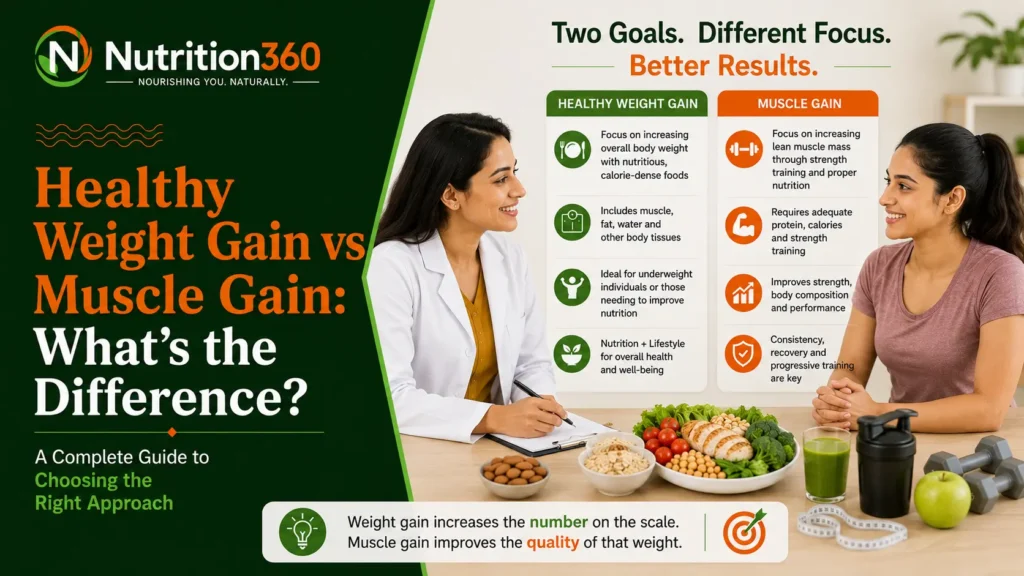
Healthy weight gain focuses on increasing overall body weight with nutritious foods and adequate calories. Muscle gain, on the other hand, specifically aims to increase lean muscle mass through strength training, sufficient protein, recovery, and appropriate energy intake.
What Is Healthy Weight Gain?
Healthy weight gain means increasing your body weight gradually while providing the body with essential nutrients. The objective is not simply to eat as much as possible, but to increase calorie intake through nutritious, energy-dense foods.
A healthy weight-gain diet generally includes:
- Adequate calories
- High-quality protein
- Whole grains and other carbohydrate sources
- Healthy fats
- Fruits and vegetables
- Dairy or suitable alternatives
- Nuts and seeds
- Adequate fluids
- Regular meals and healthy snacks
The NHS recommends gradual weight gain and suggests that adults who need to gain weight may consider adding around 300–500 calories per day, while emphasizing nutritious foods rather than relying on foods high in sugar and saturated fat.
What Happens During Healthy Weight Gain?
When you consistently consume more energy than your body uses, your body weight can increase. However, the additional weight may come from different components, including:
- Muscle tissue
- Body fat
- Glycogen and associated water
- Other lean tissues
Therefore, an increase on the weighing scale does not necessarily mean that you have gained muscle.
For someone who is underweight, a properly planned calorie surplus can be beneficial. However, the quality of the diet and the inclusion of resistance exercise can influence how much of the gained weight comes from lean tissue.
What Is Muscle Gain?
Muscle gain, also known as muscle hypertrophy, refers specifically to increasing the size and mass of skeletal muscles.
Unlike general weight gain, muscle gain requires an appropriate training stimulus. Resistance exercises such as weight training, bodyweight exercises, resistance bands, and other forms of progressive resistance encourage muscles to adapt and become stronger.
Strength training is an important component of building and maintaining muscle. Mayo Clinic notes that strength training can increase muscle mass and strength while also supporting bone health and body composition.
Muscle gain typically requires:
- Progressive resistance training
- Adequate protein
- Sufficient total calories
- Carbohydrates to support training
- Healthy fats
- Adequate sleep and recovery
- Consistency over time
Protein and resistance exercise work together to stimulate muscle protein synthesis, which is central to muscle growth and repair. Research summarized by the International Society of Sports Nutrition indicates that approximately 1.4–2.0 g of protein per kg of body weight per day is sufficient for most exercising individuals seeking to support muscle growth and maintenance.
Healthy Weight Gain vs Muscle Gain: Key Differences
Although healthy weight gain and muscle gain can happen together, their primary objectives are different.
Factor | Healthy Weight Gain | Muscle Gain |
Primary goal | Increase overall body weight | Increase muscle mass |
Main strategy | Calorie surplus with nutritious foods | Resistance training + adequate nutrition |
Protein | Important | Particularly important |
Strength training | Helpful | Essential for maximizing muscle development |
Weight gained | Muscle, fat, water and other tissues | Primarily aims to increase lean muscle |
Calorie intake | Usually increased | Usually requires sufficient energy, often a modest surplus |
Progress measurement | Body weight, BMI and overall health | Strength, muscle size, body composition and weight |
Main concern | Gaining weight without compromising diet quality | Maximizing muscle while limiting unnecessary fat gain |
The key difference is simple: healthy weight gain is about increasing total body weight, whereas muscle gain is about increasing lean muscle tissue.
Can You Gain Weight Without Gaining Muscle?
Yes.
You can gain weight without significant muscle growth if your calorie intake increases but you do not provide your muscles with an adequate training stimulus.
For example, regularly consuming calorie-dense foods while remaining physically inactive may increase body weight, but the additional weight is not necessarily muscle.
This is why “eat more to gain weight” is incomplete advice for someone whose goal is to build a stronger, more muscular body.
If your goal is muscle gain, nutrition should be combined with progressive resistance training.
Can You Gain Muscle Without Gaining Much Weight?
Yes, particularly in certain situations.
Body composition can improve without a large change in scale weight. For example, someone may gain muscle while losing some body fat, resulting in relatively little change in total body weight.
This can occur more readily in people who are:
- New to resistance training
- Returning to training after a break
- Carrying higher levels of body fat
- Improving protein intake and training consistency
- Following an appropriately structured exercise and nutrition program
Therefore, the weighing scale alone cannot tell you whether you are successfully gaining muscle.
Measurements such as strength, waist circumference, progress photographs, body composition assessments, and changes in muscle measurements can provide additional information.
Nutrition for Healthy Weight Gain
If your primary goal is healthy weight gain, focus on increasing calories without compromising nutritional quality.
1. Eat More Frequently
If large meals feel difficult to manage, divide your daily intake into smaller meals and snacks.
A practical pattern may include:
- Breakfast
- Mid-morning snack
- Lunch
- Evening snack
- Dinner
- Optional bedtime snack
This can make it easier to consistently consume enough calories.
2. Choose Nutrient-Dense Foods
Instead of relying heavily on sweets, fried foods and sugary beverages, choose foods that provide both calories and nutrients.
Good options can include:
- Milk and yogurt
- Paneer and other dairy products
- Eggs
- Lentils and beans
- Soy and tofu
- Nuts and seeds
- Nut butters
- Whole grains
- Rice and potatoes
- Fruits
- Avocado
- Healthy cooking oils
3. Include Protein at Meals
Protein supports tissue maintenance and repair and becomes especially important when resistance training is part of your routine.
Vegetarian protein options include:
- Dal
- Rajma
- Chole
- Soy
- Tofu
- Paneer
- Greek yogurt
- Milk
- Eggs, for people who include them
Non-vegetarian options may include:
- Chicken
- Fish
- Eggs
- Lean meat
4. Add Healthy Calories
Small additions can increase the energy content of meals without dramatically increasing portion size.
For example:
- Add nuts to yogurt.
- Add seeds to smoothies.
- Add paneer or tofu to meals.
- Use nut butter with whole-grain toast.
- Add healthy oils to cooked meals.
- Include milk or yogurt with snacks.
Nutrition for Muscle Gain
Muscle gain requires more than simply increasing protein intake.
A balanced muscle-building diet should provide adequate:
Protein
Protein supplies amino acids required for muscle repair and growth.
For healthy exercising individuals, the ISSN position stand reports that 1.4–2.0 g/kg/day is generally sufficient to support muscle building and maintenance. Individual needs can vary based on body size, training status, diet, age and other factors.
Carbohydrates
Carbohydrates provide an important source of energy for resistance training and can help support training performance.
Good choices include:
- Rice
- Whole-wheat roti
- Potatoes
- Sweet potatoes
- Fruits
- Oats
- Whole grains
- Legumes
Healthy Fats
Healthy fats contribute energy and support normal physiological functions.
Sources include:
- Nuts
- Seeds
- Nut butters
- Avocado
- Olive oil
- Other plant-based oils
Micronutrients
Vitamins and minerals are also important for overall health and normal physiological function. A varied diet containing vegetables, fruits, whole grains, legumes, dairy or alternatives, nuts and seeds can help provide a broad range of nutrients.
The Role of Strength Training in Muscle Gain
If building muscle is your goal, resistance training is one of the most important components of your plan.
Common resistance-training exercises include:
- Squats
- Lunges
- Deadlifts
- Push-ups
- Rows
- Pull-downs
- Bench presses
- Shoulder presses
- Leg presses
- Resistance-band exercises
The principle of progressive overload is important. Over time, you can gradually increase resistance, repetitions, sets, training volume, or exercise difficulty according to your ability and program.
Mayo Clinic recommends strength training the major muscle groups at least twice a week for general health and fitness, with resistance challenging enough to fatigue the muscles within an appropriate repetition range.
For a specific muscle-building program, training frequency, exercise selection, volume, intensity and recovery should be individualized.
Healthy Weight Gain vs Muscle Gain: Which One Should You Choose?
The right goal depends on your current body composition, health status and personal objective.
Choose a healthy weight-gain approach if:
- You are underweight.
- You have unintentionally lost weight.
- You struggle to consume enough calories.
- Your doctor or dietitian has advised you to gain weight.
- Your priority is improving overall nutritional status and body weight.
Focus on muscle gain if:
- Your body weight is already within a suitable range.
- You want to increase strength.
- You want a more muscular physique.
- You participate in resistance training.
- Your goal is to improve body composition.
Combine both if:
You are underweight and also want to become stronger and more muscular.
In this situation, a nutrient-dense calorie surplus combined with resistance training and adequate protein may be a more appropriate strategy than simply increasing calories.
Research on diets designed to increase lean mass indicates that a sustained energy surplus can support muscle-building processes and the demands of resistance training.
How to Gain Weight Without Excessive Fat Gain
If you want to increase body weight while prioritizing muscle, avoid the common mistake of dramatically increasing calories overnight.
Instead:
- Start with a moderate increase in calorie intake.
- Prioritize protein-rich foods.
- Perform regular resistance training.
- Include nutritious carbohydrate sources.
- Include healthy fats.
- Monitor body weight regularly.
- Track strength and performance.
- Adjust calorie intake based on progress.
- Get adequate sleep and recovery.
- Maintain consistency.
A gradual approach can make it easier to assess whether changes are moving you toward your desired body composition.
Healthy Weight Gain Does Not Mean Eating Junk Food
One of the biggest misconceptions about weight gain is that high-calorie processed foods are the best solution.
Foods such as sugary drinks, sweets, cakes, deep-fried foods and highly processed snacks can increase calorie intake, but they may provide relatively little nutritional value.
Healthy weight gain should focus on calorie density plus nutrient density.
Instead of:
Sugary drink + chips + sweets
consider:
Milk/yogurt + nuts + fruit + whole-grain food + a protein source
The goal is not simply to consume more calories. It is to improve overall nutritional intake while achieving the desired weight change.
How to Track Muscle Gain vs Weight Gain
The weighing scale is useful, but it should not be your only measurement.
Consider tracking:
Body Weight
Measure under similar conditions and look at the trend rather than reacting to day-to-day fluctuations.
Strength
Record your performance on major exercises. Increasing strength over time can be a useful indicator that your training program is working.
Body Measurements
Track measurements such as:
- Waist
- Chest
- Arms
- Thighs
- Hips
Progress Photos
Taking photographs under consistent lighting and positioning can help you identify gradual changes in body shape.
Body Composition
If available and appropriate, professional body-composition assessment can provide additional information about changes in fat mass and lean mass.
Common Mistakes During Weight Gain and Muscle Building
Mistake 1: Eating Everything in Sight
A large calorie surplus does not guarantee faster muscle growth. Excess calories can also contribute to unnecessary fat gain.
Mistake 2: Focusing Only on Protein
Protein is important, but carbohydrates, fats, vitamins, minerals and overall calorie intake also matter.
Mistake 3: Avoiding Strength Training
If the goal is muscle gain, nutrition alone is not enough. Resistance training provides the stimulus for muscle adaptation.
Mistake 4: Ignoring Recovery
Muscle development requires recovery. Poor sleep and inadequate rest can make it harder to maintain consistent training.
Mistake 5: Judging Progress Only by Body Weight
A higher number on the scale does not automatically mean more muscle.
Mistake 6: Depending Entirely on Supplements
Protein powders and other supplements can be convenient, but they should complement—not replace—a balanced diet.
Healthy Weight Gain vs Muscle Gain: The Bottom Line
Healthy weight gain and muscle gain are related but different goals.
Healthy weight gain aims to increase overall body weight through adequate calories and nutritious foods. Muscle gain specifically focuses on increasing lean muscle tissue through resistance training, sufficient protein, adequate energy and recovery.
If you want to gain weight, the goal should not simply be to make the number on the scale higher. A well-planned approach should consider what type of weight you want to gain and why.
If your goal is to gain muscle, combine a balanced nutrition plan with progressive strength training. If you are underweight or experiencing unexplained weight loss, speak with a qualified healthcare professional or registered dietitian before making major dietary changes. Unintentional or sudden weight loss can sometimes indicate an underlying health issue.
The healthiest approach is one that supports your individual nutritional needs, fitness goals and long-term well-being.
- Mansee
No. Healthy weight gain refers to increasing overall body weight with nutritious food and adequate calories. Muscle gain specifically refers to increasing muscle mass, usually through resistance training combined with adequate nutrition.
Yes. Especially for people who are new to resistance training, returning after a break, or starting from a lower body weight, it may be possible to increase muscle while also gaining body weight.
Include adequate calories, protein-rich foods, whole grains or other carbohydrate sources, healthy fats, fruits and vegetables. Examples include eggs, dairy, paneer, tofu, soy, lentils, beans, nuts, seeds, rice, whole grains and fruits.
For most healthy exercising individuals, research summarized by the International Society of Sports Nutrition suggests approximately 1.4–2.0 g of protein per kg of body weight per day can support muscle building and maintenance. Individual requirements may differ.
Resistance training is one of the most effective ways to provide the stimulus required for muscle growth. Bodyweight exercises, resistance bands and other resistance-based activities can also be used.
Yes. Changes in muscle mass and body fat can occur simultaneously, meaning body composition can improve without a significant change in total body weight.
Possible reasons include insufficient resistance training, inadequate protein, poor training progression, excessive calorie intake, inadequate recovery, or an inappropriate training program.
No. Eating more calories can support weight gain, but muscle growth requires an appropriate resistance-training stimulus, adequate protein and recovery.
No. Many people can meet their protein requirements through whole foods. Protein supplements can be convenient when dietary intake is difficult to achieve, but they are not essential for everyone.
The appropriate rate depends on your starting weight, body composition, health, age, activity level and goal. A gradual approach is generally preferable to uncontrolled rapid weight gain.
Yes. A structured nutrition and resistance-training program can help people with a naturally lower body weight increase both body weight and muscle mass.
Not necessarily. A balanced diet should generally be the foundation. Supplements may be useful in specific situations, but their suitability depends on individual nutritional needs and health status.
Both matter. Protein provides amino acids required for muscle protein synthesis, while adequate energy availability supports training and physiological processes involved in building lean tissue.
Use multiple indicators rather than body weight alone. Track strength, body measurements, progress photographs and, where appropriate, body-composition assessments.
Consider professional guidance if you are underweight, have difficulty gaining weight despite eating adequately, have experienced unexplained weight loss, have a medical condition, or want a personalized nutrition and muscle-building plan.
Want to gain weight in a healthy and sustainable way?
A personalized nutrition plan can help you determine the right balance of calories, protein and nutrient-dense foods based on your body, lifestyle and health goals.
Consult a qualified dietitian to create a personalized weight-gain or muscle-building nutrition plan tailored to your individual needs.
Other Blogs

Discover a practical PCOS diet plan for women in Noida Extension with balanced Indian meals, vegetarian options, healthy food choices, and easy tips for managing...
Read More
Discover a practical PCOS diet plan for women in Noida Extension with balanced Indian meals, vegetarian options, healthy food choices, and easy tips for managing...
Read More
Looking for a fatty liver dietitian in Noida? Discover the best foods to eat and avoid, Indian diet tips, healthy meal choices, and practical nutrition...
Read More
Mansee Chauhan is the Head Nutritionist at Nutrition360, Greater Noida West, dedicated to providing personalized, evidence-based nutrition guidance for individuals seeking sustainable improvements in their health and lifestyle. She focuses on creating practical diet plans tailored to individual health goals, dietary preferences, lifestyle patterns, and nutritional needs. Her areas of nutrition expertise include weight management, diabetes-friendly nutrition, gut health, hormonal wellness, fitness nutrition, and overall healthy living. Through personalized nutrition counselling and structured dietary guidance, Mansee Chauhan helps individuals develop healthier eating habits and make sustainable lifestyle changes for long-term well-being.