GLP-1 Weight Loss Injections vs Diet: Do You Still Need a Dietitian?
Table of Contents
ToggleGLP-1 weight loss injections have changed the conversation around obesity and weight management. Medicines that act on GLP-1 pathways can reduce appetite, increase feelings of fullness and support weight loss in appropriate patients. But does taking a GLP-1 medication mean you no longer need to focus on your diet?
No.
For many people, nutrition becomes even more important when using a GLP-1-based weight-loss medication. These medicines can reduce hunger and food intake, which may make it easier to eat fewer calories. However, eating less does not automatically mean eating well.
When appetite and portion sizes decrease, it becomes important to make the food you do eat nutritionally valuable—particularly with respect to protein, fibre, vitamins, minerals and hydration.
Prescription weight-management medicines are generally intended to be used alongside healthy eating and physical activity rather than as replacements for them.
This is where a dietitian can play an important role.
What Are GLP-1 Weight Loss Injections?
GLP-1 stands for glucagon-like peptide-1, a hormone involved in appetite regulation, digestion and blood-glucose control.
Some prescription medicines used for obesity or weight management work through the GLP-1 pathway. Depending on the medication, they may:
- Reduce hunger
- Increase feelings of fullness
- Slow stomach emptying
- Reduce overall food intake
- Help improve blood-glucose control in appropriate patients
Examples of medicines in this broader category include semaglutide and liraglutide. Tirzepatide acts on both GIP and GLP-1 pathways and is also used for weight management in appropriate patients.
These are prescription medicines, not ordinary diet supplements or quick-fix weight-loss products. Whether a person should use them depends on their health, weight-related risks, medical history, other medicines and a healthcare professional’s assessment.
How Do GLP-1 Injections Help With Weight Loss?
One of the important effects of GLP-1-based medicines is appetite regulation.
You may notice that:
- You feel hungry less frequently.
- You become full with smaller portions.
- You have fewer cravings.
- Large meals become less appealing.
- You naturally consume fewer calories.
This can make maintaining a calorie deficit easier.
However, a smaller appetite can create a nutritional challenge too.
If you consistently eat very small amounts without planning your meals, you may not get enough protein, fibre or essential micronutrients.
That means the question should not simply be:
“How little can I eat?”
A better question is:
“How can I make my smaller meals nutritionally complete?”
GLP-1 Injections vs Diet: Are They Alternatives?
Not really.
The comparison between GLP-1 injections vs diet can be misleading because medication and nutrition serve different purposes.
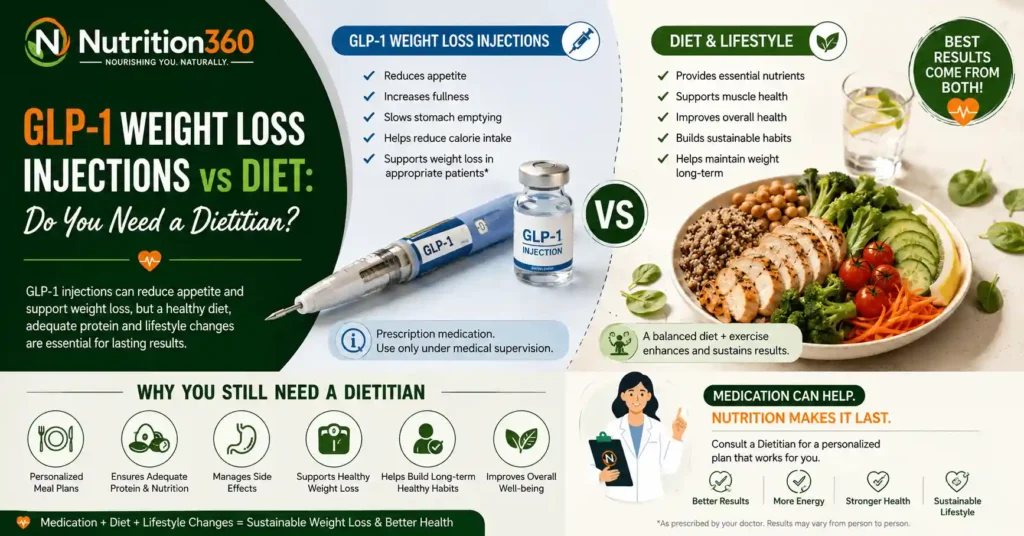
GLP-1 medication | Healthy diet |
May help regulate appetite | Provides essential nutrients |
Can reduce food intake | Helps maintain nutritional adequacy |
May support weight loss | Supports long-term eating habits |
Requires medical supervision | Can be personalised by a dietitian |
Does not replace lifestyle changes | Supports long-term weight management |
Evidence-based guidance emphasises that weight-management medications work best as part of a broader lifestyle approach that includes healthy eating and physical activity.
So, taking a GLP-1 medication does not mean you can ignore your diet.
Do You Still Need a Dietitian While Taking GLP-1 Medication?
For some people, working with a dietitian can be particularly useful.
A dietitian can help translate a reduced appetite into a balanced, practical eating pattern rather than simply telling you to eat less.
This becomes especially useful if you:
- Struggle to meet your protein requirements
- Experience nausea or digestive discomfort
- Have very little appetite
- Have diabetes or insulin resistance
- Follow a vegetarian or vegan diet
- Have PCOS
- Exercise regularly or strength train
- Are losing weight rapidly
- Are concerned about muscle loss
- Have difficulty planning meals
- Want to maintain your weight after treatment
A personalised nutrition plan can also take into account your food preferences, lifestyle, work schedule, cultural eating habits and medical needs.
Why Protein Matters During GLP-1-Assisted Weight Loss
One of the biggest nutrition considerations during significant weight loss is preserving lean muscle mass.
When calorie intake falls substantially, weight loss may include both fat mass and lean mass. Adequate protein intake, combined with appropriate resistance exercise, can support muscle preservation.
This is particularly relevant for people taking appetite-suppressing medications because reduced appetite can make it harder to consume enough protein.
Recent nutrition discussions around GLP-1 therapy have increasingly highlighted protein intake and muscle preservation as important considerations. (Verywell Health)
Protein-rich Indian food options include:
- Eggs
- Paneer
- Greek yogurt/curd
- Milk
- Tofu
- Soy
- Dal
- Rajma
- Chana
- Chickpeas
- Fish
- Chicken
- Lean meat
The exact amount of protein you need depends on factors such as your body size, age, activity level, health conditions and weight-loss goals.
Do not automatically follow a high-protein diet or take protein supplements without considering your individual nutritional and medical requirements.
What Should You Eat While Taking GLP-1 Medication?
There is no single “GLP-1 diet” that works for everyone.
Instead, meals should generally focus on nutrient density and tolerability.
1. Prioritise Protein
Because meals may become smaller, consider including a protein source whenever you eat.
Examples:
Breakfast
- Eggs + vegetables
- Greek yogurt + fruit
- Paneer/tofu preparation
Lunch
- Dal + vegetables + roti
- Paneer/tofu + salad + roti
- Chicken/fish + vegetables + rice
Dinner
- Dal + vegetables
- Paneer/tofu + cooked vegetables
- Fish/chicken + vegetables
Your dietitian can adjust portions according to your individual requirements.
2. Include Fibre-Rich Foods
Fibre can support digestive health and help create balanced meals.
Good Indian options include:
- Vegetables
- Fruits
- Whole grains
- Beans
- Lentils
- Chickpeas
- Seeds
- Nuts
However, if you experience bloating or constipation while taking a GLP-1 medicine, suddenly increasing fibre may not be comfortable.
Increase fibre gradually and discuss persistent digestive symptoms with your healthcare professional.
3. Stay Hydrated
Reduced food intake can sometimes make it easier to overlook fluids.
Aim to maintain adequate hydration throughout the day unless your doctor has advised you to restrict fluids.
Water should generally be your primary beverage.
If you have persistent vomiting, diarrhoea, dizziness or difficulty maintaining fluid intake, contact your healthcare professional.
4. Choose Nutrient-Dense Foods
When appetite is low, every meal has an opportunity to provide useful nutrition.
Instead of filling your limited appetite with foods that provide lots of calories but relatively few nutrients, prioritise:
- Protein
- Vegetables
- Fruits
- Whole grains
- Pulses
- Dairy or suitable alternatives
- Nuts and seeds in appropriate portions
This approach can help you get more nutrition from smaller meals.
What Foods Should You Avoid on a GLP-1 Diet?
There isn’t a universal list of foods that every GLP-1 user must avoid.
However, some people find that very large, greasy, fried or highly processed meals worsen digestive symptoms.
Depending on your individual tolerance, you may need to limit:
- Very large meals
- Deep-fried foods
- Excessively fatty meals
- Heavy desserts
- Large amounts of sugary beverages
- Excessive alcohol
- Foods that personally trigger nausea, reflux or bloating
The goal isn’t to create a highly restrictive diet.
The goal is to develop an eating pattern that you can tolerate, maintain and sustain.
Can GLP-1 Injections Replace a Weight Loss Diet?
No.
A GLP-1 medication can influence appetite and support weight loss, but it doesn’t teach you:
- How to build balanced meals
- How much protein you need
- How to eat when your appetite changes
- How to manage food choices at work
- How to maintain muscle
- How to maintain weight after weight loss
- How to adapt your diet to Indian food habits
Healthy eating and physical activity remain important components of long-term weight management.
What Happens When You Stop GLP-1 Medication?
This is one reason why developing sustainable eating and lifestyle habits matters.
Some people regain weight after stopping weight-management medication. The amount varies between individuals and depends on factors including the underlying condition, lifestyle and treatment plan.
Therefore, long-term weight management shouldn’t depend solely on appetite suppression.
A sustainable nutrition plan can help you develop habits that remain useful during and after treatment.
Your doctor should decide whether, when or how a medication should be changed or stopped. Do not stop a prescription weight-loss medication on your own.
GLP-1 Medication and Muscle Loss: Why It Matters
Seeing a lower number on the weighing scale is not the only measure of successful weight loss.
What you lose matters too.
If significant weight loss is accompanied by excessive loss of lean mass, it can affect strength, physical function and body composition.
A comprehensive weight-management strategy therefore considers:
- Weight
- Waist circumference
- Body composition where appropriate
- Protein intake
- Physical activity
- Strength training
- Sleep
- Overall nutritional adequacy
A dietitian can help build a nutrition strategy around these goals, while a qualified healthcare professional or fitness professional can guide appropriate exercise.
Can Vegetarians Take a GLP-1 Diet Plan?
Yes.
A GLP-1 nutrition plan does not need to be based on meat or fish.
Indian vegetarian diets can include protein from:
- Paneer
- Tofu
- Soy
- Milk
- Curd
- Greek yogurt
- Dal
- Rajma
- Chana
- Chickpeas
- Peas
- Nuts and seeds
However, vegetarian diets can vary significantly in protein density. A dietitian can help you create meals that provide adequate protein and other nutrients while fitting your food preferences.
What About GLP-1 Medication and Diabetes?
Some GLP-1-based medicines are also used in diabetes management.
If you have diabetes and are taking medication that can lower blood glucose, your nutrition and medication plan should be coordinated with your healthcare team.
Do not change diabetes medicines simply because you are eating less or losing weight.
A personalised plan may need to consider:
- Blood glucose levels
- Diabetes medications
- Meal timing
- Carbohydrate intake
- Protein
- Fibre
- Physical activity
- Weight changes
Who Should Not Start GLP-1 Weight Loss Injections Without Medical Advice?
GLP-1-based weight-loss medicines are not suitable for everyone.
A healthcare professional needs to determine whether medication is appropriate based on your medical history, current medicines, health conditions and individual risk factors.
People who are pregnant or planning pregnancy should discuss weight-management treatment with their healthcare professional; prescription weight-management medicines are generally not used during pregnancy.
Never purchase or use prescription weight-loss injections from an unverified source.
Why a Dietitian Can Add Value to GLP-1 Treatment
Think of GLP-1 medication as one part of the weight-management strategy, not the entire strategy.
A dietitian can help you answer practical questions such as:
“I’m not hungry. What should I eat?”
Build smaller but nutrient-dense meals.
“I’m vegetarian. How do I get enough protein?”
Create practical Indian vegetarian protein combinations.
“I’m losing weight quickly. Is my diet adequate?”
Review your overall food intake and nutritional quality.
“I feel nauseous after meals.”
Identify meal patterns and foods that may be difficult to tolerate and coordinate concerns with your medical team.
“What should I eat after my workout?”
Plan appropriate protein and nutrition around your activity.
“What happens when I reach my target weight?”
Develop a sustainable maintenance strategy.
This is where personalised nutrition can complement medical treatment.
GLP-1 Weight Loss: Medication + Diet + Lifestyle
A more sustainable approach looks like this:
Medical assessment
↓
Appropriate medication if indicated
↓
Personalised nutrition
↓
Adequate protein + fibre + micronutrients
↓
Physical activity + resistance training
↓
Monitoring
↓
Long-term weight maintenance
This is fundamentally different from simply taking an injection and expecting the medication to do everything.
Should You See a Dietitian Before Starting GLP-1 Medication?
It can be useful to discuss nutrition before treatment begins.
A pre-treatment nutrition assessment can help establish:
- Current eating pattern
- Protein intake
- Fibre intake
- Hydration
- Meal timing
- Food preferences
- Physical activity
- Weight-loss goals
- Existing nutritional gaps
This provides a baseline against which your eating pattern can be adapted as appetite changes.
When Should You Consider a Dietitian During GLP-1 Treatment?
Consider professional nutrition support if:
- Your appetite has become extremely low.
- You are struggling to eat balanced meals.
- You are losing weight faster than expected.
- You are concerned about muscle loss.
- You are experiencing persistent digestive symptoms.
- You don’t know what to eat.
- You follow a vegetarian diet.
- You have diabetes, PCOS or another condition requiring dietary considerations.
- You want to transition toward long-term weight maintenance.
The Bottom Line
GLP-1 weight loss injections and a healthy diet are not competing approaches.
For appropriate patients, medication may help control appetite and support weight loss. But nutrition remains important because your body still needs adequate protein, fibre, vitamins, minerals and fluids—even when you feel less hungry.
A dietitian can help turn reduced appetite into a nutritionally balanced, personalised and sustainable eating plan.
And the goal should not simply be:
“Lose as much weight as possible.”
It should be:
“Lose excess weight while protecting health, nutrition, muscle and long-term results.”
If you are considering or already using a GLP-1-based medication for weight management, discuss the medication with your doctor and consider personalised nutrition support from a qualified dietitian.
- Mansee
A dietitian is not necessarily required for every person, but personalised nutrition support can be valuable. GLP-1 medicines can reduce appetite, making it important to pay attention to protein, fibre, hydration and overall nutritional adequacy.
GLP-1 medications can support weight loss by affecting appetite and food intake, but they are intended to be part of a broader weight-management approach. Healthy eating and physical activity remain important for long-term results.
Focus on nutrient-dense meals containing an appropriate source of protein, vegetables or fruit, fibre-rich foods and adequate fluids. Your exact diet should be personalised according to your health, food preferences and medication.
There is no single protein target that is appropriate for everyone taking GLP-1 medication. Requirements depend on factors such as body size, age, physical activity, health conditions and weight-loss goals. A dietitian can calculate an appropriate target for you.
Weight loss can involve both fat and lean mass. Because appetite suppression may reduce overall food and protein intake, maintaining adequate protein and including appropriate resistance exercise are important considerations during significant weight loss.
Yes. Vegetarian sources such as paneer, tofu, soy, dairy, curd, lentils, beans and chickpeas can provide protein. Portion sizes and food choices should be personalised.
In most cases, there is no need to automatically eliminate traditional Indian staples such as roti or rice. The appropriate quantity depends on your overall diet, health conditions, energy needs and weight-management goals.
There is no universal list of foods that everyone must avoid. Some people may find very large, greasy or heavy meals harder to tolerate. Your diet should be adjusted according to your symptoms and individual nutritional requirements.
Some people may benefit from protein supplements if they cannot meet their protein needs through food, but supplements are not automatically necessary. Discuss supplementation with your doctor or dietitian, particularly if you have kidney disease or another medical condition.
Physical activity is generally an important part of weight management. Strength training can be particularly useful for supporting muscle health, but your exercise plan should be appropriate for your fitness level and medical condition.
Some people regain weight after stopping weight-management medication. Long-term healthy eating and physical activity habits can help support weight maintenance, but medication changes should always be discussed with your prescribing healthcare professional.
No. Medication does not replace healthy eating. Instead, your diet may need to become more intentional because you may be eating smaller quantities.
No. GLP-1-based weight-loss medicines are prescription treatments and are not suitable for everyone. A healthcare professional should assess whether they are appropriate for you.
A dietitian’s role is primarily nutrition and dietary management. Prescription medication should be assessed and prescribed by an appropriately qualified medical professional.
Yes. A dietitian can help you build a balanced eating pattern around your changing appetite, protein requirements, food preferences, activity level and weight-management goals. Medication management itself should remain with your prescribing clinician.
Not necessarily. A GLP-1 nutrition plan should focus on nutritional adequacy and sustainable eating rather than simply reducing calories as much as possible.
Medication and diet should not be viewed as an either/or choice. For people who are prescribed weight-management medication, combining medication with healthy eating, physical activity and behavioural changes is generally the more comprehensive approach.
Looking for Personalised Weight-Loss Nutrition Support in Noida?
If you’re using or considering a GLP-1-based weight-loss medication, a personalised nutrition plan can help you make the most of your meals while working toward sustainable weight management.
Nutrition360 provides personalised diet and nutrition guidance based on your individual goals, food preferences, lifestyle and nutritional requirements.
Book a personalised weight-loss consultation with Nutrition360.
Other Blogs

Discover a practical PCOS diet plan for women in Noida Extension with balanced Indian meals, vegetarian options, healthy food choices, and easy tips for managing...
Read More
Discover a practical PCOS diet plan for women in Noida Extension with balanced Indian meals, vegetarian options, healthy food choices, and easy tips for managing...
Read More
Looking for a fatty liver dietitian in Noida? Discover the best foods to eat and avoid, Indian diet tips, healthy meal choices, and practical nutrition...
Read More
Mansee Chauhan is the Head Nutritionist at Nutrition360, Greater Noida West, dedicated to providing personalized, evidence-based nutrition guidance for individuals seeking sustainable improvements in their health and lifestyle. She focuses on creating practical diet plans tailored to individual health goals, dietary preferences, lifestyle patterns, and nutritional needs. Her areas of nutrition expertise include weight management, diabetes-friendly nutrition, gut health, hormonal wellness, fitness nutrition, and overall healthy living. Through personalized nutrition counselling and structured dietary guidance, Mansee Chauhan helps individuals develop healthier eating habits and make sustainable lifestyle changes for long-term well-being.