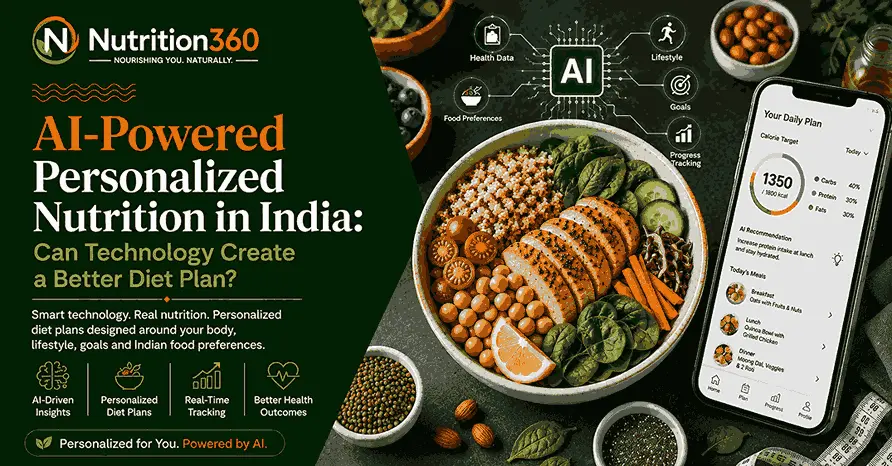
AI-Powered Personalized Nutrition in India: Can AI Create a Better Diet Plan?
Table of Contents
ToggleIn recent years, the way people approach health and nutrition has undergone a significant transformation. Gone are the days when everyone followed the same diet chart for weight loss, muscle gain, or disease management. Today, people are increasingly looking for personalized diet solutions that align with their unique health goals, lifestyle, food preferences, and medical conditions. This growing demand has led to the emergence of AI-powered personalized nutrition, a technology-driven approach that aims to create customized diet plans using artificial intelligence, data analytics, and health insights.
As more Indians search for terms such as best diet plan for weight loss India, custom weight loss program, diet for PCOS and PCOD, sports nutritionist, and dietician near me, the question naturally arises: Can technology really create a better diet plan than traditional methods?
The answer lies somewhere between technology and human expertise. Artificial intelligence has the potential to make nutrition more personalized, accessible, and data-driven. However, understanding its capabilities and limitations is essential before considering it the future of diet planning.
Understanding AI-Powered Personalized Nutrition
Artificial Intelligence (AI) refers to computer systems that can process information, identify patterns, learn from data, and generate recommendations. In nutrition, AI is used to analyze various health and lifestyle factors to develop dietary suggestions tailored to an individual’s needs.
Unlike generic diet charts that provide the same meal recommendations to everyone, AI-powered nutrition platforms can evaluate multiple variables simultaneously. These may include age, gender, weight, height, activity level, dietary preferences, sleep patterns, health conditions, fitness goals, and eating habits.
For example, two people may have the same weight-loss goal but completely different lifestyles. One may be a vegetarian office worker with minimal physical activity, while the other may be an active gym-goer looking to preserve muscle while reducing body fat. A personalized nutrition system attempts to account for these differences and create recommendations accordingly.
The objective is simple: move beyond one-size-fits-all diet plans and create nutrition strategies that are practical, sustainable, and relevant to the individual.
Why Traditional Diet Plans Often Fail
One of the biggest reasons many diet plans fail is that they do not consider individual differences.
A generic weight-loss diet may recommend the same breakfast, lunch, and dinner to thousands of people regardless of their lifestyle, medical history, food preferences, or cultural eating habits. While such plans may work temporarily for some individuals, they often become difficult to maintain in the long run.
Many people abandon diets because the recommendations feel unrealistic. They may be asked to eat foods they do not enjoy, avoid staple foods they have eaten all their lives, or follow meal schedules that do not fit their daily routine.
This is where personalized nutrition becomes valuable. Rather than forcing people to adapt to a diet, personalized nutrition aims to adapt the diet to the individual.
The Rise of Personalized Nutrition in India
India presents a unique challenge for nutrition planning because of its incredible dietary diversity.
A meal commonly consumed in South India may be entirely different from one eaten in North India. Vegetarian, vegan, eggitarian, and non-vegetarian dietary patterns coexist across the country. Religious practices, regional cuisines, seasonal foods, and family traditions further influence eating habits.
As a result, a standardized diet chart often fails to address the practical realities of Indian lifestyles.
AI-powered nutrition platforms can potentially bridge this gap by creating meal plans based on local foods, regional preferences, and cultural eating patterns. Instead of recommending unfamiliar foods, technology can help people optimize the foods they already consume.
This localization has the potential to make healthy eating more practical and sustainable for Indian consumers.
How AI Creates a Personalized Diet Plan
The process begins with data collection. Users typically provide information about their age, weight, height, activity level, dietary preferences, health goals, and medical history. Some platforms may also integrate information from wearable devices, fitness trackers, or health apps.
Using this information, AI algorithms analyze patterns and generate nutrition recommendations. The system may estimate calorie requirements, suggest appropriate meal compositions, recommend protein intake, and identify food substitutions that align with the user’s goals.
The real advantage of AI lies in its ability to continuously learn and adapt. If a person consistently skips breakfast, struggles to follow a particular meal plan, or prefers certain foods over others, the system can potentially adjust future recommendations.
This creates a dynamic nutrition experience rather than a static diet chart.
AI vs Traditional Diet Planning
The difference between traditional diet planning and AI-powered personalized nutrition can be significant.
Traditional Diet Planning | AI-Powered Personalized Nutrition |
Standardized meal plans | Individualized recommendations |
Limited personalization | Multiple factors considered simultaneously |
Fixed diet charts | Dynamic and adaptive meal suggestions |
Manual tracking | Automated tracking and analysis |
Periodic adjustments | Continuous monitoring and optimization |
Generic recommendations | Lifestyle-specific guidance |
While AI offers impressive capabilities, it is important to understand that technology alone does not guarantee success. The effectiveness of any nutrition plan still depends on the quality of the underlying recommendations and the individual’s ability to follow them consistently.
Can AI Help Create the Best Weight Loss Program in India?
One of the most common applications of AI-powered nutrition is weight management.
People searching for the best weight loss program in India often encounter hundreds of diet plans promising rapid results. However, sustainable weight loss is rarely achieved through extreme dietary restrictions or short-term interventions.
AI can support weight management by helping individuals understand their eating patterns, identify nutritional gaps, monitor progress, and receive personalized recommendations. Instead of prescribing the same calorie target to everyone, AI can estimate individual energy needs and create a more tailored approach.
For example, someone with a sedentary lifestyle may require a different nutritional strategy than a person who exercises regularly. Similarly, a vegetarian individual may need different protein recommendations than someone who consumes animal-based foods.
By taking these factors into account, AI can potentially create a more effective custom weight loss program.
Personalized Nutrition for PCOS and PCOD
Women searching for a diet for PCOS and PCOD often receive conflicting information online. Some sources recommend eliminating entire food groups, while others promote highly restrictive eating patterns.
The reality is that PCOS affects individuals differently, and nutritional needs can vary significantly.
A personalized nutrition approach considers factors such as body weight, activity level, food preferences, metabolic health, and lifestyle habits. AI can assist by organizing meal plans, suggesting nutrient-dense foods, and helping users track adherence to dietary recommendations.
While technology can provide valuable support, women with PCOS should still seek guidance from qualified healthcare professionals when making significant dietary changes.
AI and Sports Nutrition
Athletes and fitness enthusiasts have unique nutritional requirements. This is why many individuals search for a sports nutritionist when looking to improve performance, support recovery, or optimize body composition.
AI-powered nutrition tools can help organize meal timing, estimate nutrient intake, and align dietary recommendations with training schedules. For example, a person training for a marathon may require a different nutritional strategy than someone focused on strength training or fat loss.
Technology can simplify data analysis and meal planning, but competitive athletes often benefit from professional sports nutrition guidance that takes into account the specific demands of their sport.
Can AI Help Manage Health Conditions?
Personalized nutrition is not limited to weight loss and fitness goals. Many people seek dietary guidance for conditions such as hypertension, diabetes, and cardiovascular disease.
For example, someone looking for a hypertension meal plan may need assistance reducing sodium intake while maintaining a balanced and enjoyable diet. AI can help identify high-sodium foods, suggest alternatives, and organize meal plans that align with dietary goals.
Similarly, people with diabetes may use nutrition technology to monitor food intake and better understand how dietary choices fit into their overall management plan.
However, it is important to recognize that medical nutrition therapy should always involve appropriate healthcare professionals. AI can support decision-making but should not replace clinical judgment.
AI vs Dietitian: Which Is Better?
One of the most frequently asked questions is whether AI can replace a dietitian.
The answer is no—not entirely.
Artificial intelligence excels at processing large amounts of information, identifying patterns, and automating repetitive tasks. It can generate meal suggestions, analyze food intake, and provide ongoing tracking.
Dietitians, on the other hand, bring professional expertise, clinical judgment, behavioral coaching, and individualized problem-solving skills that technology cannot fully replicate.
AI-Powered Nutrition | Qualified Dietitian |
Fast data analysis | Human expertise and judgment |
Automated tracking | Personalized counseling |
Meal plan generation | Clinical interpretation |
Continuous monitoring | Emotional and behavioral support |
Pattern recognition | Understanding complex health situations |
Digital convenience | Individualized professional care |
The most effective model may be a combination of both. Technology can handle data-driven tasks while dietitians focus on guidance, motivation, and personalized care.
The Benefits of AI-Powered Personalized Nutrition
The greatest strength of AI-powered nutrition lies in its ability to personalize recommendations at scale.
Individuals can receive meal suggestions tailored to their goals, preferences, and lifestyle. They can track progress more efficiently and make informed decisions based on real-world data.
AI can also improve accessibility. People who may not have immediate access to a nutrition professional can still receive structured guidance and educational support.
Furthermore, technology can make dietary planning more flexible by suggesting alternatives when specific foods are unavailable, helping users maintain consistency without feeling restricted.
The Limitations of AI Nutrition
Despite its advantages, AI-powered nutrition is not perfect.
Technology depends on the quality of the data it receives. Incorrect information, inaccurate food logging, or incomplete health details can lead to inappropriate recommendations.
AI systems also lack the ability to fully understand personal circumstances, emotional challenges, social influences, and complex medical conditions.
For individuals with diabetes, kidney disease, food allergies, pregnancy, or other health concerns, professional medical guidance remains essential.
Technology should therefore be viewed as a powerful tool rather than a complete replacement for human expertise.
The Future of Personalized Nutrition in India
The future of nutrition is likely to become increasingly personalized.
Advancements in artificial intelligence, wearable devices, digital health platforms, and nutrition databases are creating new opportunities to tailor dietary recommendations to individual needs.
Instead of asking, “What is the best diet?” people may increasingly ask, “What is the best diet for me?”
This shift represents a major change in how nutrition is delivered and consumed.
In India, where dietary diversity is immense and health awareness is growing, AI-powered personalized nutrition has the potential to make healthy eating more practical, accessible, and sustainable.
- Mansee
AI-powered personalized nutrition uses artificial intelligence to analyze individual health, lifestyle, dietary preferences, and goals to create customized nutrition recommendations.
AI can create more personalized recommendations by considering multiple individual factors. However, the effectiveness of the plan depends on the quality of the information provided and appropriate professional oversight.
Yes. AI can support weight management by helping users track food intake, monitor progress, estimate calorie requirements, and receive personalized recommendations.
Yes. AI can tailor meal recommendations based on factors such as age, weight, activity level, dietary preferences, and health goals.
AI can assist with meal planning, food tracking, and personalized recommendations. However, women with PCOS should consult qualified healthcare professionals for individualized guidance.
AI can support sports nutrition planning, but athletes with specialized performance goals often benefit from working directly with a qualified sports nutrition professional.
AI can help identify dietary patterns, suggest lower-sodium alternatives, and organize meal plans that support blood pressure management goals.
No. AI is a useful tool for meal planning and tracking, but dietitians provide clinical expertise, behavioral support, and personalized care that technology cannot fully replace.
Personalized diet solutions are nutrition plans designed around an individual’s health goals, lifestyle, food preferences, and nutritional needs rather than using a generic diet chart.
The future is likely to involve greater integration of AI, wearable technology, digital health tools, and professional nutrition support to deliver more personalized and effective dietary guidance.
Conclusion
AI-powered personalized nutrition is transforming the way people approach diet planning. By combining technology, data analysis, and nutrition science, it offers a more individualized alternative to traditional diet charts.
Whether someone is searching for the best weight loss program in India, a custom weight loss program, a diet for PCOS and PCOD, a sports nutritionist, a hypertension meal plan, or simply better personalized diet solutions, AI has the potential to make dietary guidance more relevant and adaptable.
However, technology alone is not the answer. The most effective approach combines AI-driven insights with professional nutrition expertise and sustainable lifestyle habits.
The future of nutrition is not about choosing between technology and dietitians—it is about using both together to create smarter, more personalized health solutions.
Other Blogs
Discover a practical PCOS diet plan for women in Noida Extension with balanced Indian meals, vegetarian options, healthy food choices, and easy tips for managing...
Read More
Discover a practical PCOS diet plan for women in Noida Extension with balanced Indian meals, vegetarian options, healthy food choices, and easy tips for managing...
Read More
Looking for a fatty liver dietitian in Noida? Discover the best foods to eat and avoid, Indian diet tips, healthy meal choices, and practical nutrition...
Read More
Mansee Chauhan is the Head Nutritionist at Nutrition360, Greater Noida West, dedicated to providing personalized, evidence-based nutrition guidance for individuals seeking sustainable improvements in their health and lifestyle. She focuses on creating practical diet plans tailored to individual health goals, dietary preferences, lifestyle patterns, and nutritional needs. Her areas of nutrition expertise include weight management, diabetes-friendly nutrition, gut health, hormonal wellness, fitness nutrition, and overall healthy living. Through personalized nutrition counselling and structured dietary guidance, Mansee Chauhan helps individuals develop healthier eating habits and make sustainable lifestyle changes for long-term well-being.